





Book Now : 1-844-360-1553
Belize Reservations Office
Phone: +501-226-4297
Phone: 1-844-360-1553
WhatsApp: +501-670-4811
E-mail: [email protected]


Close
Belize Activities & Adventures
Belize Wildlife Guide: Animals and Where to See Them
Oct 30, 2026
Belize is home to an incredible variety of wildlife, from jaguars roaming the rainforest and howler monkeys calling through the treetops to colorful toucans, gentle manatees, and sea turtles swimming along the Belize Barrier Reef.
Despite its relatively small size, Belize supports an impressive diversity of animals across tropical rainforests, rivers, wetlands, mangroves, and coral reefs. Each habitat offers different wildlife experiences, making the country a remarkable destination for nature lovers.
Some animals, like howler monkeys and tropical birds, can be spotted during a rainforest walk. Others, including jaguars and pumas, require patience, luck, and time in the right habitat.
Whether you’re exploring a jungle lodge, visiting a wildlife sanctuary, or snorkeling along the reef, this guide introduces the fascinating animals of Belize and some of the best places to see them.
What Animals Live in Belize?
Belize is home to hundreds of species of birds, mammals, reptiles, and marine animals. Some are relatively easy to encounter, while others remain hidden deep within the rainforest.
Here are some of Belize’s most recognizable animals and where visitors may find them.
| Animal | Where to See Them in Belize |
| Baird’s tapir | Mainland forests, Belize Zoo |
| Jaguar and puma | Chan Chich Lodge, protected rainforests, Belize Zoo |
| Black howler monkey | Community Baboon Sanctuary, Lamanai, Caracol, Belize River |
| Spider monkey | Chan Chich Lodge, mainland forests, Belize Zoo |
| Keel-billed toucan | Mainland tropical forests |
| Scarlet macaw | Red Bank Village, Chiquibul, Maya Mountains |
| Jabiru stork | Crooked Tree Wildlife Sanctuary |
| Coatimundi and peccaries | Mainland forests, Chan Chich Lodge |
| West Indian manatee | Swallow Caye, coastal lagoons and seagrass habitats |
| Crocodiles | Rivers, wetlands and coastal lagoons |
| Sea turtles | Belize Barrier Reef and marine reserves |
| Nurse sharks and stingrays | Hol Chan Marine Reserve, Shark Ray Alley |
Rainforest Animals of Belize
Belize’s tropical forests provide habitat for some of Central America’s most fascinating mammals. From large predators to monkeys and smaller forest creatures, the jungle is home to an extraordinary variety of wildlife.
Baird’s Tapir: Belize’s National Animal
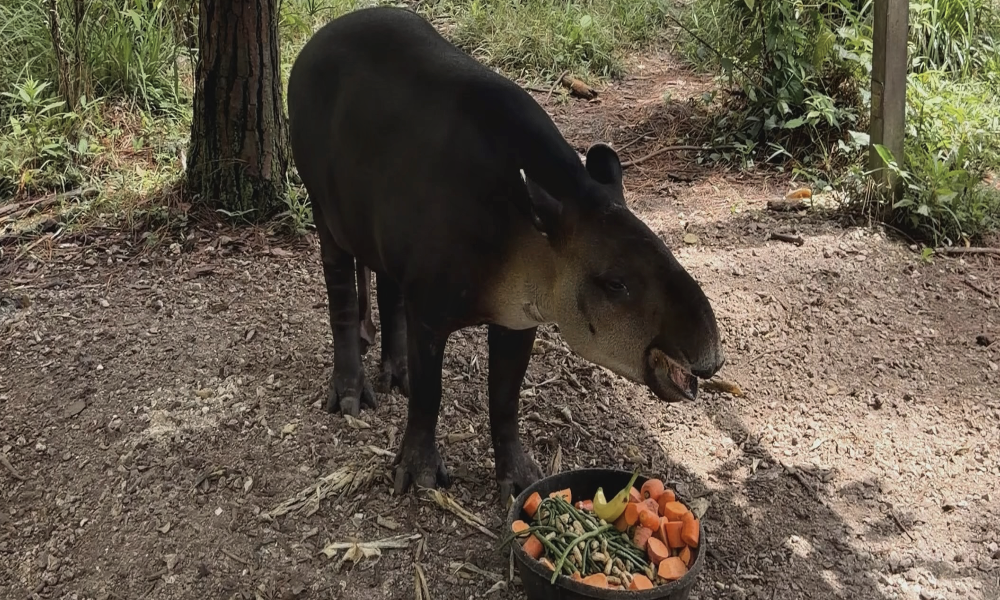
The Baird’s tapir is one of Belize’s most distinctive mammals. With its rounded body, sturdy legs, and short, flexible snout, it has an appearance unlike almost any other animal in the forest.
Known locally as the mountain cow, the Baird’s tapir is Belize’s national animal and its largest native land mammal. Despite its nickname, it is more closely related to horses and rhinoceroses than cattle.
Tapirs feed on leaves, shoots, and fruits, helping disperse seeds as they move through the forest. This makes them important contributors to healthy rainforest ecosystems.
These generally shy animals inhabit protected forests throughout Belize and are often more active during cooler hours and at night.
One of the most interesting facts about tapirs is that their calves are born with pale stripes and spots, providing camouflage among forest vegetation.
For more fascinating details, read our article featuring 23 facts about Belize’s national animal, the Baird’s tapir.
Jaguars, Pumas and Belize’s Other Wild Cats
Belize is home to five species of wild cats: jaguars, pumas, ocelots, margays, and jaguarundis.
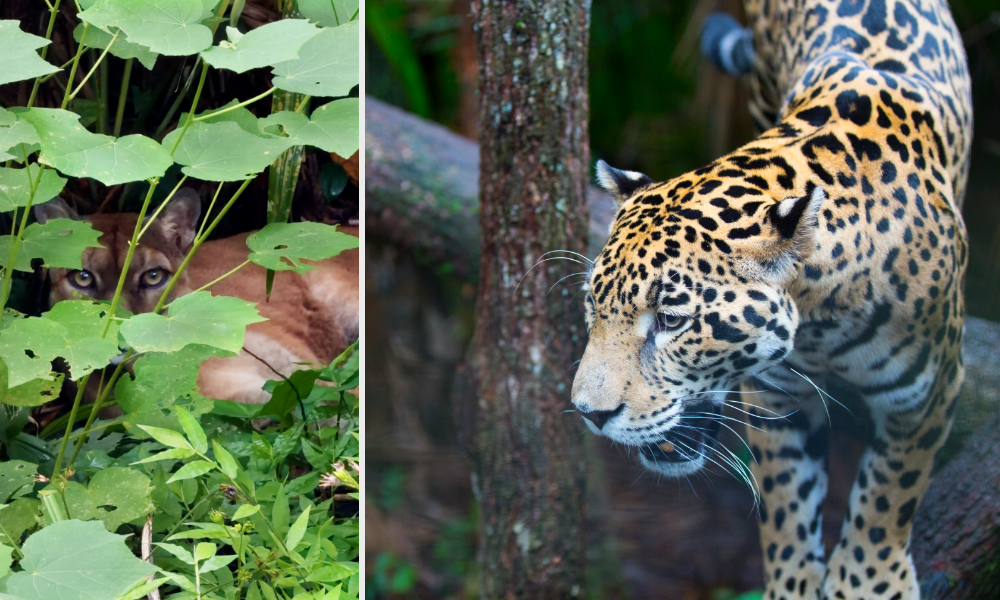
The jaguar is the largest wild cat in the Americas and one of Belize’s most iconic predators. Its powerful build and distinctive spotted coat make it instantly recognizable.
Pumas, also known as mountain lions, are another impressive predator found in Belize. Their tan-colored coats distinguish them from jaguars, and they are remarkably adaptable to different forest environments.
Smaller wild cats, including ocelots and margays, are equally fascinating but often difficult to encounter because of their secretive behavior.
Where can you see jaguars and pumas in Belize?
One of the country’s most promising destinations for wildlife enthusiasts is Chan Chich Lodge, located within the Gallon Jug Estate in northwestern Belize.
Surrounded by extensive rainforest, Chan Chich is known for its wildlife viewing opportunities. All five of Belize’s native wild cat species have been documented on the property.
Guests can explore the forest on guided daytime and nighttime wildlife drives, traveling along rainforest roads where animals occasionally emerge from the surrounding forest. Even the drive into the lodge can offer interesting wildlife sightings.
Although seeing a jaguar or puma in the wild remains rare, spending several days at Chan Chich offers opportunities to experience their natural habitat.
Another important destination is Cockscomb Basin Wildlife Sanctuary in southern Belize, internationally recognized for its jaguar conservation efforts.
Visitors exploring Cockscomb’s rainforest trails may discover jaguar paw prints in muddy areas. Finding tracks is generally more likely than encountering the elusive cats themselves, but it provides fascinating evidence of wildlife moving through the forest.
Black Howler Monkeys and Spider Monkeys
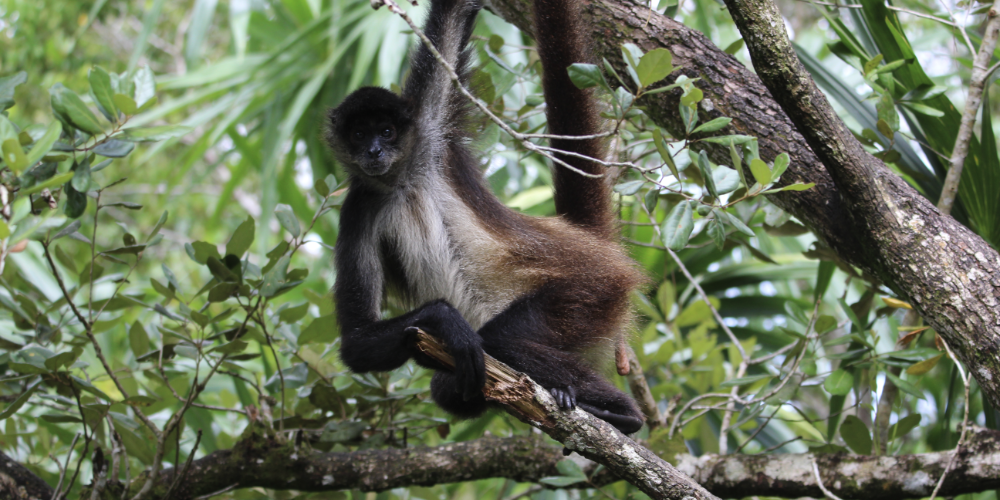
Belize is home to two native monkey species: the Yucatán black howler monkey and the Central American spider monkey. Although both spend much of their lives in the treetops, their diets and activity patterns are quite different.
Black Howler Monkeys
Sometimes the first indication of monkeys in a Belize rainforest is their unmistakable call.
Black howler monkeys are famous for their deep, powerful roars, which can travel considerable distances through the forest. Despite their relatively modest size, they are among the loudest land animals in the world.
Howler monkeys feed heavily on leaves, supplemented by fruit and flowers. Because leaves provide relatively little energy and take time to digest, howlers spend much of their day resting and conserving energy.
Visitors may spot them sitting quietly in the treetops, often in social groups, between periods of feeding and calling.
Black howler monkeys inhabit forested areas throughout parts of mainland Belize. Visitors may encounter them at ancient Maya archaeological sites such as Lamanai and Caracol, along the Belize River, and in other protected forest habitats.
One of the best-known places to observe them is the Community Baboon Sanctuary in the Belize River Valley, where guided walks offer opportunities to see monkeys living freely in the forest.
Despite their local nickname of baboons, these animals are actually howler monkeys.
Spider Monkeys
Spider monkeys have a very different lifestyle from their howler monkey relatives.
With long, slender limbs and a powerful prehensile tail, spider monkeys are remarkably agile, moving quickly through the forest canopy.
Unlike howler monkeys, which rely heavily on leaves, spider monkeys eat predominantly ripe fruit. Because fruit sources are scattered throughout the forest and change with the seasons, spider monkeys generally travel greater distances in search of food.
This makes them particularly active and fascinating to watch as they swing and climb between trees.
Spider monkeys are generally harder to encounter in the wild than howler monkeys, but Chan Chich Lodge is one of the places where visitors may have opportunities to observe them during guided forest walks or wildlife drives.
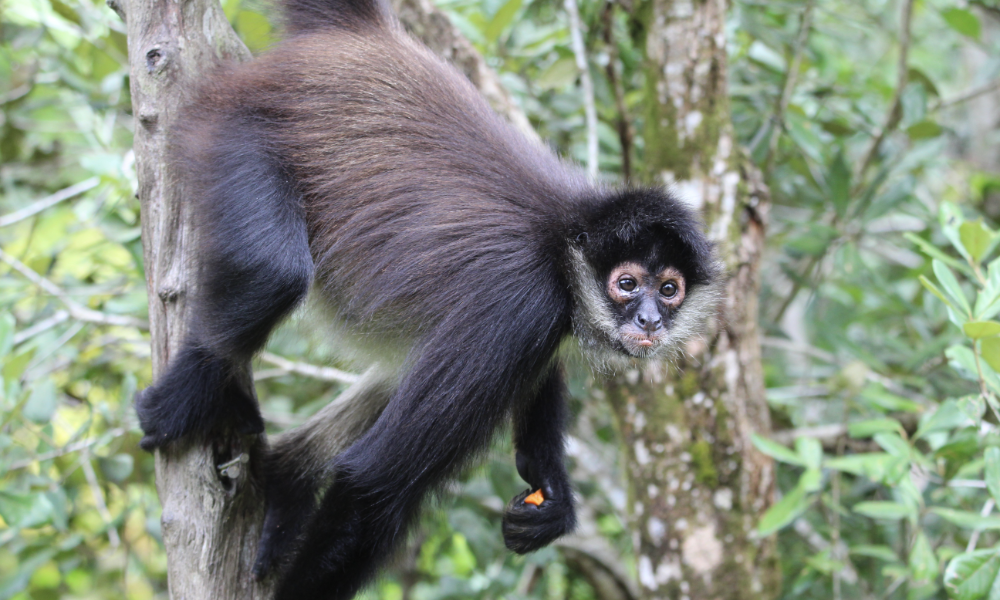
The Belize Zoo is another excellent option for seeing spider monkeys up close.
Coatimundis, Peccaries and Other Forest Mammals
Beyond Belize’s larger and more famous animals, the rainforest supports smaller mammals that are equally interesting to observe.
Coatimundis, recognizable by their long noses and ringed tails, often forage on the forest floor in search of insects, fruit, and other food.
Collared peccaries are pig-like mammals that travel through forest habitats, sometimes in groups. Agoutis, small rodents with slender legs, are another important part of the forest ecosystem.
After dark, animals such as kinkajous become active in the treetops, while pacas, known locally as gibnuts, search the forest floor for food.
Not all wildlife has fur or feathers. Brilliant blue morpho butterflies, leafcutter ants, frogs, and countless other creatures add another fascinating dimension to Belize’s forests.
These smaller species are a reminder that a memorable rainforest experience doesn’t require spotting a jaguar.
Birds of Belize: Toucans, Macaws and Wetland Wildlife
Belize is an exceptional destination for birdwatching, with hundreds of bird species recorded across its diverse habitats.
Rainforest canopies, mountain forests, wetlands, and coastal areas each attract different birds, making birdwatching rewarding throughout the country.
Keel-Billed Toucans and Tropical Birds
The keel-billed toucan, Belize’s national bird, is instantly recognizable by its brightly colored bill.
These colorful birds inhabit tropical forests, where they move among the treetops searching for fruit and other food.
Belize’s forests also support parrots, hummingbirds, trogons, motmots, and numerous other tropical species.
The ocellated turkey is another remarkable bird found in Belize, known for its iridescent plumage and distinctive tail feathers.
Scarlet Macaws: Where to See Them in Belize
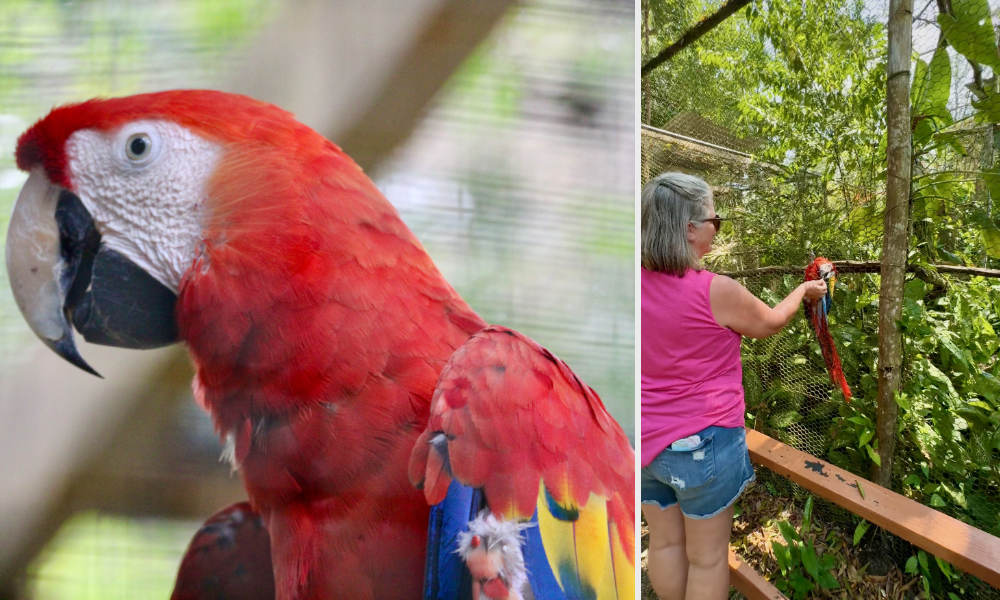
Few tropical birds are as spectacular as the scarlet macaw. With brilliant red, yellow, and blue feathers, these large parrots are unmistakable when flying above the rainforest canopy.
One of the best places to see scarlet macaws in Belize is Red Bank Village, a small Maya community in the Stann Creek District of southern Belize.
Each year, typically between December and March, scarlet macaws gather in the forested hills surrounding Red Bank to feed on seasonal fruits.
During this period, visitors may see groups of macaws perched in trees, feeding, or flying across the valley.
Exploring the area with a knowledgeable local guide is highly recommended. Local guides know the birds’ feeding areas, understand their seasonal movements, and can help visitors find suitable viewpoints.
The experience may include hiking into the surrounding hills, listening for their distinctive calls, and watching their brilliant colors stand out against the rainforest.
Outside the seasonal viewing period at Red Bank, scarlet macaws inhabit remote forest areas associated with the Maya Mountains and Chiquibul region, where they also breed.
For birdwatchers and wildlife enthusiasts visiting Belize during the winter months, a guided visit to Red Bank offers one of the country’s most memorable opportunities to see scarlet macaws in the wild.
Jabiru Storks and Wetland Birds
Belize’s wetlands are home to a different collection of birdlife.
One of the most impressive is the jabiru stork, a towering wading bird with a black head and neck, white body, and distinctive red band around its lower neck.
Crooked Tree Wildlife Sanctuary is among Belize’s best-known birdwatching destinations, attracting jabiru storks, herons, egrets, ibises, and numerous resident and migratory species.
Birdwatching can be particularly rewarding when water levels drop during the dry season, concentrating fish and attracting feeding birds.
Other habitats, including coastal mangroves and lagoons around Ambergris Caye, support pelicans, ospreys, frigatebirds, and shorebirds.
For a more detailed look at the country’s birdlife, explore our birding in Belize guide.
Manatees, Crocodiles and Coastal Wildlife
Belize’s coastal waters, rivers, and wetlands provide important habitats for animals that depend on aquatic and shoreline environments.
West Indian Manatees
Often called sea cows, manatees are gentle aquatic mammals that move slowly through shallow coastal waters.
Belize is an important habitat for the Antillean manatee, a subspecies of the West Indian manatee.
These large herbivores feed primarily on aquatic vegetation and inhabit coastal lagoons, seagrass beds, and connected waterways.
Swallow Caye Wildlife Sanctuary and surrounding coastal waters are among the places associated with manatee conservation and observation.
Spotting a manatee may involve watching quietly for a rounded back or nose breaking the surface.
Because these animals are vulnerable to boat collisions and habitat disturbance, responsible observation involves maintaining a safe distance and allowing them to move naturally.
Crocodiles, Iguanas and Other Reptiles
Belize is home to two native crocodile species: the American crocodile and Morelet’s crocodile.
American crocodiles are commonly associated with coastal and brackish-water environments, while Morelet’s crocodiles are more frequently found in freshwater habitats.
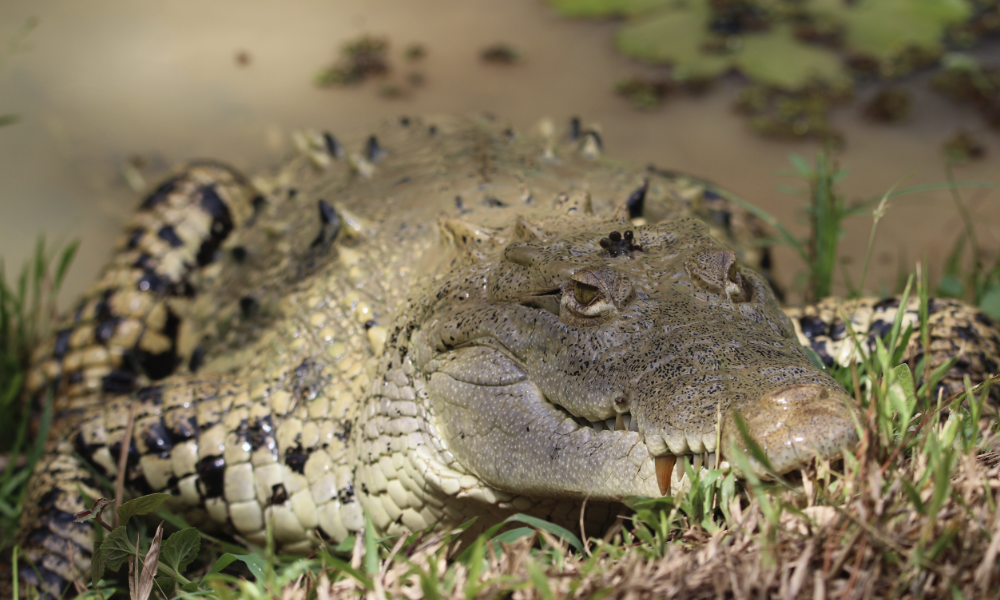
Both inhabit suitable wetlands and waterways throughout parts of Belize.
Green iguanas, turtles, boas, and other reptiles can also be found in the country’s diverse ecosystems.
Whether encountered along a riverbank, near a lagoon, or on a forest trail, reptiles should always be observed from a respectful distance.
Marine Wildlife of the Belize Barrier Reef
The Belize Barrier Reef supports a remarkable variety of marine species, making snorkeling and diving some of the most rewarding ways to encounter wildlife in the country.
Nurse Sharks & Southern Stingrays
Shark Ray Alley, within Hol Chan Marine Reserve near Ambergris Caye, is one of Belize’s best-known locations for observing nurse sharks and southern stingrays.
These animals are frequently seen in the shallow waters of the reserve, providing visitors with opportunities to observe them underwater.
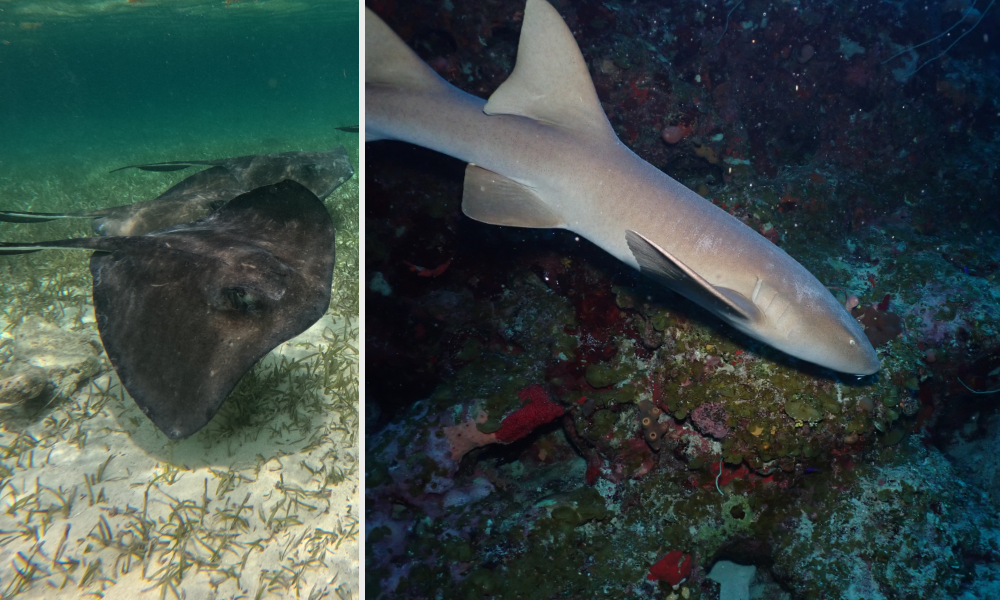
Although nurse sharks are generally calm when undisturbed, they remain wild animals and should never be handled.
Sea Turtles of Belize
Belize’s coastal waters provide important feeding and nesting habitats for sea turtles. The three species most regularly encountered are green, hawksbill, and loggerhead turtles.
Green Sea Turtles
Green sea turtles are commonly associated with shallow seagrass beds, where adults feed primarily on seagrass and algae. Visitors may encounter them while snorkeling in marine reserves and other protected coastal habitats.
Hawksbill Sea Turtles
Hawksbill turtles are recognized by their narrow, pointed beaks and beautifully patterned shells. They are closely associated with coral reef environments, where they feed heavily on marine sponges.
Hawksbills are among the sea turtles frequently observed in Belize’s reef habitats.
Loggerhead Sea Turtles
Loggerheads are large, powerful turtles with broad heads and strong jaws adapted for feeding on hard-shelled prey, including crabs and mollusks.
They occur in Belizean waters but are generally less frequently encountered by snorkelers than green and hawksbill turtles.
Where can you see sea turtles in Belize?
Marine reserves along the Belize Barrier Reef offer opportunities to observe turtles in their natural habitat. Hol Chan Marine Reserve, near Ambergris Caye, is one of the better-known snorkeling locations where visitors may encounter green and hawksbill turtles.
Sea turtles also use reef habitats, seagrass beds, and nesting beaches around Belize’s offshore cayes and atolls.
Tropical Fish and Coral Reef Life
Belize’s coral reefs are home to an incredible variety of fish and other marine organisms.
Parrotfish, angelfish, butterflyfish, groupers, snappers, and countless smaller species create colorful underwater communities.
Hol Chan Marine Reserve, Mexico Rocks, and other protected reef areas offer opportunities to explore these marine habitats.
Learn more about this remarkable ecosystem in our Belize Barrier Reef guide.
Best Places to See Wildlife in Belize
Belize offers several outstanding destinations for wildlife enthusiasts, from protected rainforests and wetland sanctuaries to marine reserves and conservation-focused attractions. Each offers a different opportunity to discover the country’s remarkable animals.
The Belize Zoo: Native Animals Up Close
For visitors who want to see a wide variety of Belize’s native animals in one place, the Belize Zoo is one of the country’s most rewarding wildlife experiences.
Unlike traditional zoos featuring animals from around the world, the Belize Zoo focuses exclusively on species native to Belize. Visitors can observe jaguars, tapirs, monkeys, crocodiles, scarlet macaws, harpy eagles, and other fascinating animals in naturalistic enclosures.
One of the zoo’s standout experiences is its VIP Tour, a privately guided visit led by a knowledgeable member of the zoo’s staff. The experience introduces guests to more than 20 species of Belizean wildlife and includes opportunities for special, staff-supervised animal encounters while learning about animal behavior, care, and conservation.
For travelers hoping to observe animals that are otherwise difficult to encounter in the wild, the Belize Zoo provides an exceptional opportunity.
Read our complete Belize Zoo guide for more information about visiting.
Chan Chich Lodge: Rainforest Wildlife and Wild Cats
Located within the Gallon Jug Estate in northwestern Belize, Chan Chich Lodge is one of the country’s standout destinations for observing wildlife in its natural rainforest habitat.
Guests can explore the extensive forest on guided daytime and nighttime wildlife drives or nature walks, with opportunities to encounter monkeys, coatimundis, peccaries, tropical birds, and occasionally elusive wild cats such as jaguars and pumas.
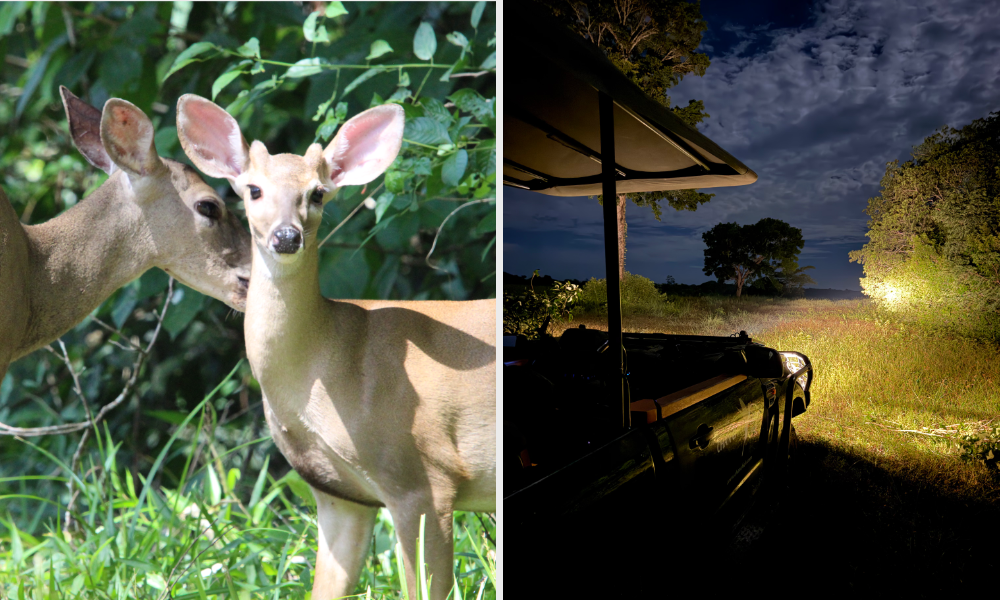
Even the drive into the property can be part of the wildlife experience.
Chan Chich is also an excellent birdwatching destination, with more than 370 bird species recorded in the area, making it appealing to visitors interested in exploring Belize’s rainforest over several days.
Cockscomb Basin Wildlife Sanctuary: Jaguar Habitat and Rainforest Trails
Cockscomb Basin Wildlife Sanctuary in southern Belize is internationally recognized for its jaguar conservation efforts.
Although seeing a jaguar in the wild is extremely rare, visitors may discover paw prints in muddy sections of the rainforest trails. Looking for animal tracks offers a fascinating way to appreciate the wildlife living in the surrounding forest.
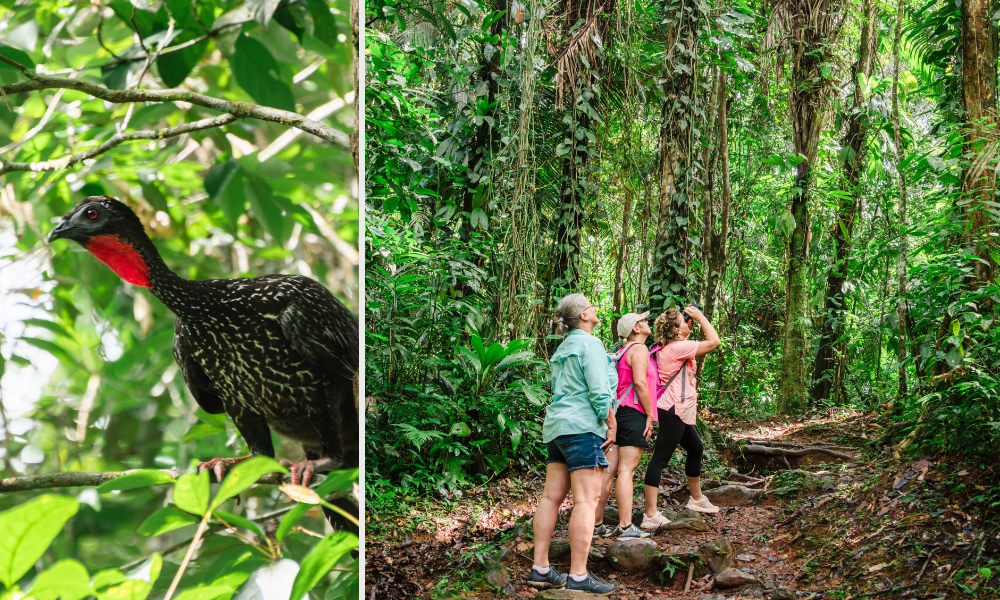
The sanctuary also offers hiking trails, waterfalls, tropical birds, and opportunities to observe other rainforest animals.
Community Baboon Sanctuary: Black Howler Monkeys
Located in the Belize River Valley, the Community Baboon Sanctuary is one of Belize’s best-known places to observe black howler monkeys in their natural habitat.
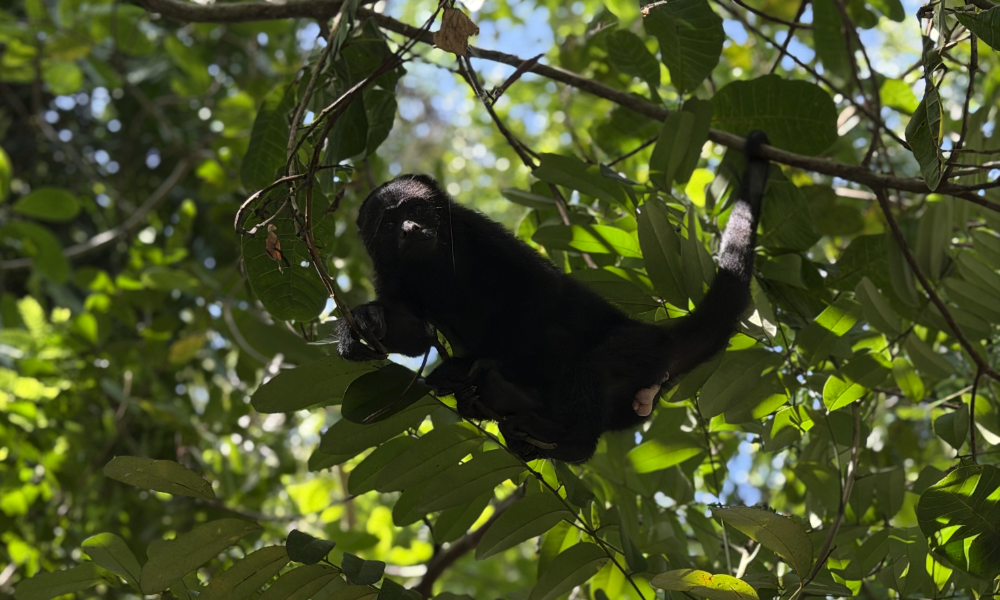
Guided forest walks offer opportunities to watch these monkeys resting, feeding, and moving through the treetops while learning about the community-led conservation efforts that protect their habitat.
Crooked Tree Wildlife Sanctuary: Wetland Birds
Crooked Tree Wildlife Sanctuary is one of Belize’s premier destinations for wetland birdwatching.
Its lagoons and surrounding wetlands support jabiru storks, herons, egrets, ibises, and numerous migratory birds.
Birdwatching can be especially rewarding during the dry season, when falling water levels concentrate fish and attract feeding waterbirds.
Hol Chan Marine Reserve: Marine Wildlife
Located off Ambergris Caye, Hol Chan Marine Reserve offers some of Belize’s most accessible marine wildlife encounters.
The reserve protects coral reef, seagrass, and mangrove habitats that support sea turtles, nurse sharks, stingrays, tropical fish, and other marine life.
Guided snorkeling trips offer opportunities to observe these species in their underwater environment, making the reserve a highlight for visitors interested in the wildlife of the Belize Barrier Reef.
Tips for Watching Wildlife in Belize
Wildlife encounters are often unpredictable, but a few simple practices can make the experience more rewarding.
- Go early or later in the day. Many animals are more active during cooler hours, while nocturnal species are best observed on guided night excursions.
- Explore with knowledgeable local guides. Experienced guides can identify animal calls, tracks, and subtle movement that visitors might otherwise overlook.
- Bring binoculars. They are useful for observing birds, monkeys, and other wildlife without approaching too closely.
- Be patient. Spending time quietly observing a habitat often reveals more than rushing from one place to another.
- Respect wildlife. Never feed, chase, or handle wild animals, and follow the rules of protected areas and marine reserves.
Above all, wildlife watching is about experiencing animals in their natural environments rather than guaranteeing a particular sighting.
Frequently Asked Questions About Belize Wildlife
What is the national animal of Belize?
The Baird’s tapir is Belize’s national animal. Known locally as the mountain cow, it is the country’s largest native land mammal and inhabits suitable forest habitats throughout parts of Belize.
Where is the best place to see jaguars in Belize?
Chan Chich Lodge is one of Belize’s most promising destinations for travelers hoping to encounter jaguars in the wild, with guided wildlife drives through protected rainforest. Cockscomb Basin Wildlife Sanctuary is another important jaguar habitat, although visitors are more likely to find tracks than see the animals themselves.
Where can you see monkeys in Belize?
Black howler monkeys can be seen in forested areas, including Lamanai, Caracol, and along the Belize River. The Community Baboon Sanctuary is particularly good for observing them. Spider monkeys are harder to encounter in the wild but may be seen at Chan Chich Lodge. The Belize Zoo offers opportunities to observe both species up close.
Can you see Belize’s native wildlife up close?
Yes. The Belize Zoo provides opportunities to observe many native animals, including jaguars, tapirs, monkeys, and tropical birds. Its VIP Tour offers a personalized guided experience with special wildlife encounters supervised by zoo staff.
Discover the Remarkable Wildlife of Belize
From the calls of howler monkeys echoing through the rainforest to sea turtles swimming above the coral reef, Belize offers remarkable opportunities to experience wildlife across a wide variety of natural habitats.
Some of the most memorable encounters happen during guided excursions, while others occur unexpectedly along a forest trail, beside a lagoon, or beneath the surface of the Caribbean Sea.
Whether your interests lie in rainforest mammals, colorful tropical birds, or marine life, discovering Belize’s wildlife adds another unforgettable dimension to exploring this diverse country.