




Book Now : 1-844-360-1553
Belize Reservations Office
Phone: +501-226-4297
Phone: 1-844-360-1553
WhatsApp: +501-670-4811
E-mail: [email protected]


Close
Belize Reef & Water Adventures
8 Monogamous Animals in Belize: Love in the Wild
Sep 18, 2026
There’s something mesmerizing about watching a school of fish move through clear Caribbean water. Sunlight catches their scales as they change direction together, and for a moment, you’re happy to float and watch.
It’s easy to get caught up in the colors and movement without thinking much about the lives unfolding around you. But have you ever wondered how these animals find a partner, or whether they stay with the same one?
That curiosity opens up a different way of looking at Belize’s wildlife. From the Belize Barrier Reef to the coastline of Ambergris Caye, let’s take a closer look at eight monogamous animals in Belize and what it means to be a couple in the wild.
What Does Monogamous Mean in the Animal World?
Before we start matchmaking Belize’s wildlife, there is one important distinction to make: monogamous does not always mean mates for life.
In the animal world, a pair may stay together for one breeding season, several seasons, or much longer. Some species form strong social partnerships and share a territory, while others come together mainly to breed and raise their young.
So rather than imagining every couple on this list staying together forever, think of monogamy as a partnership that can take different forms.
And some of those partnerships are surprisingly interesting to watch.
1. French Angelfish
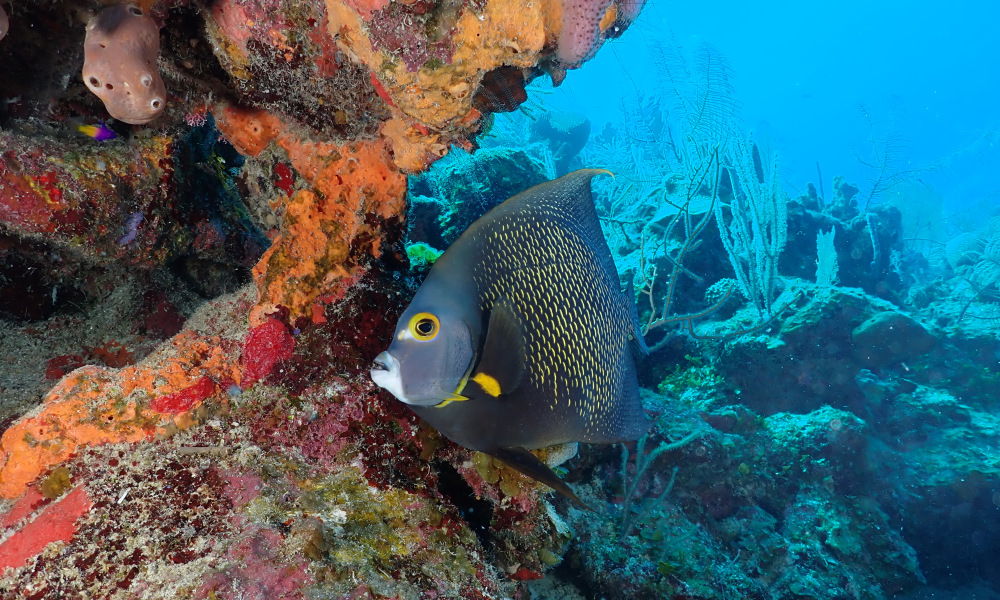
A French Angelfish is hard to miss. Its dark body is outlined by golden-yellow scales, and its long fins seem to trail behind as it moves over the reef.
What becomes even more interesting is when you notice another one nearby.
Adult French Angelfish form monogamous breeding pairs and are often seen moving through their territory together. Both fish may also help defend the area they call home.
If you’re snorkeling in Ambergris Caye and happen to spot one, take a moment before swimming on. Look around the coral and sea fans nearby, and you may notice its partner moving through the same stretch of reef.
It’s one of those little details that can turn seeing a beautiful fish into watching something much more interesting.
2. Banded Butterflyfish
With two bold black bands running across their pale bodies, Banded Butterflyfish are easy to recognize once you know what to look for.
And although you may occasionally see them feeding in larger groups, adults are most often seen in pairs.
Their partnerships can begin early and may last for a long time. Courtship is surprisingly energetic, with the two fish sometimes circling one another head to tail before darting away.
It’s not necessarily the kind of behavior you notice when you’re swimming quickly from one coral formation to the next.
Slow down, though, and the reef begins to feel different.
Instead of simply noticing another colorful fish, you start seeing who is swimming together, who follows whom, and what they’re doing along the way.
3. Longsnout Seahorse
Spotting a seahorse feels completely different.
There is no bright flash of a school passing by. Instead, you may be staring at seagrass, coral, or a sea fan before realizing a tiny seahorse has been sitting there all along.
The Longsnout Seahorse is found in Belizean waters and is known for forming pair bonds.
Seahorse courtship can include regular greeting displays, where partners approach one another, change position, and move together almost like a tiny underwater dance.
Then comes the part seahorses are famous for.
After mating, the female transfers her eggs to the male’s brood pouch. The male fertilizes and carries them while they develop before eventually releasing the tiny young into the water.
So yes, in this relationship, the male carries the babies.
Longsnout Seahorses are masters of camouflage, which makes seeing one especially rewarding. Rather than expecting to find one on every snorkeling trip, think of a seahorse as one of those special sightings that makes everyone stop and look a little closer.
4. Lined Seahorse
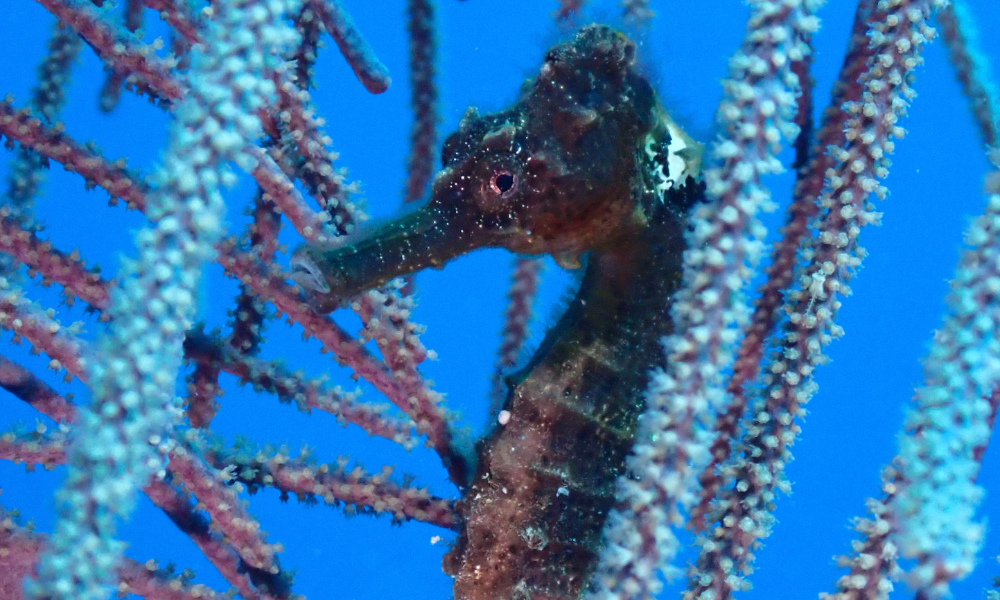
The Lined Seahorse shares many of the characteristics that make seahorses such fascinating animals.
Like other seahorses, it is not built for fast swimming. Instead, it uses its curled tail to hold onto seagrass and other underwater structures while the water moves around it.
Pairing with a suitable partner can therefore be important during breeding, and courtship involves repeated interactions that help the pair coordinate.
Lined Seahorses may even change their brightness while interacting with a partner, adding a visual signal to the courtship.
And once again, the male takes over the pregnancy.
The idea that every seahorse finds one partner and stays with them for life is more romantic than the science supports, but their pair bonding, elaborate courtship, and unusual reproductive roles still make them some of the most fascinating couples beneath the surface.
5. Sharknose Goby
The Sharknose Goby may be tiny, but its relationship has a pretty interesting business model.
These small reef fish operate cleaning stations, where larger fish pause and allow the gobies to remove parasites and unwanted material from their bodies.
It’s a win for both sides. The larger fish gets cleaned, and the goby gets a meal.
Sharknose Gobies are also known to form long-term socially monogamous pairs. A male and female can share the same cleaning station, and both may guard their partnership against potential rivals.
Picture two tiny fish working side by side while much larger reef fish come and go throughout the day.
It really does feel a little like a two-fish family business operating right on the coral reef.
For more of the unusual behavior happening underwater, explore our fun facts about Belize marine life.
6. Osprey
Eventually, you have to look up.
An Osprey circling over the Caribbean is easy to watch for longer than you intended. It glides above the water, pauses in the air, and then suddenly drops toward the sea after a fish.
But there is another side to the story when nesting season arrives.
Ospreys generally form monogamous breeding pairs, and some partners reunite across multiple seasons. They may return to the same nesting area and continue adding sticks and other materials to a nest over time.
The work is divided between them. The female typically spends more time incubating the eggs and caring for young chicks, while the male does much of the fishing and brings food back to the nest.
Once you know that, seeing an Osprey carrying a fish overhead becomes a little more interesting. It may not simply be heading off to eat. It could be taking dinner home.
Ambergris Caye has more birdlife than many visitors realize. Our experience birding on North Ambergris Caye shows just how much there is to notice once you start looking beyond the shoreline.
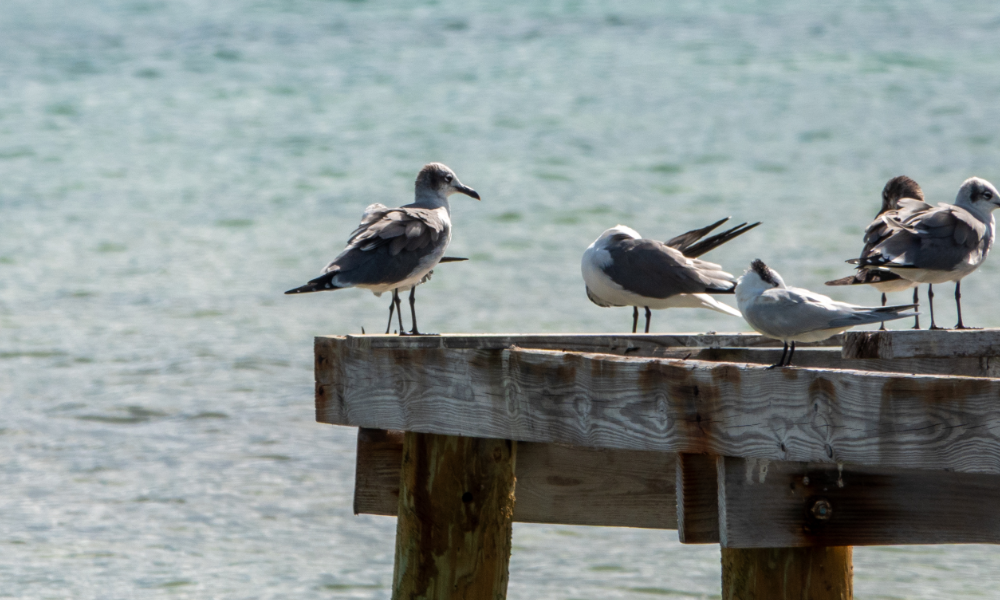
7. Laughing Gull
You may hear a Laughing Gull before you actually look up and see it.
Its distinctive call carries over the beach and water, and these gulls are a familiar part of Belize’s coastline.
Watch them for a while, however, and there is more going on than noisy seaside activity.
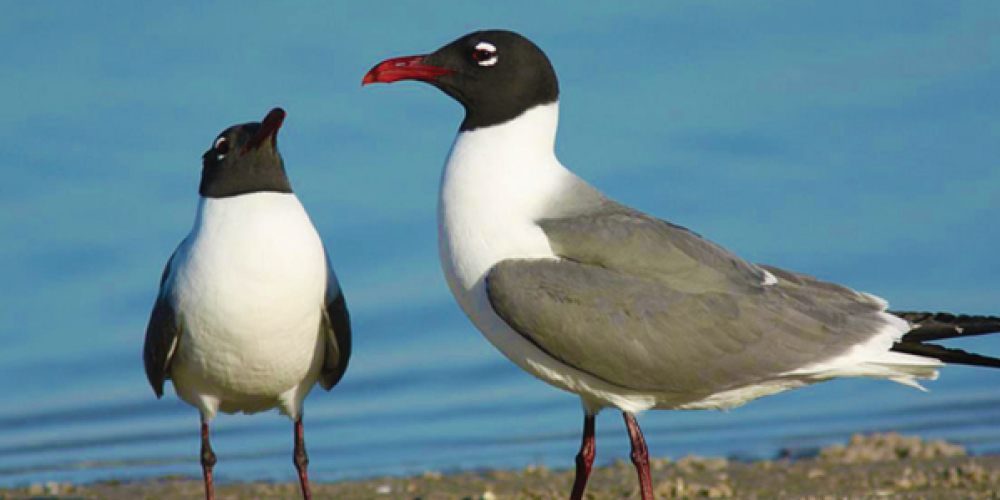
Laughing Gulls are monogamous, and some pairs remain together through several breeding seasons. Males and females typically work together to build a nest, incubate their eggs, and care for their chicks.
It’s a surprisingly cooperative family life for a bird most of us probably notice first because of its voice.
The next time you hear that unmistakable call over the water, take a second look. There may be a pair nearby.
8. Brown Pelican
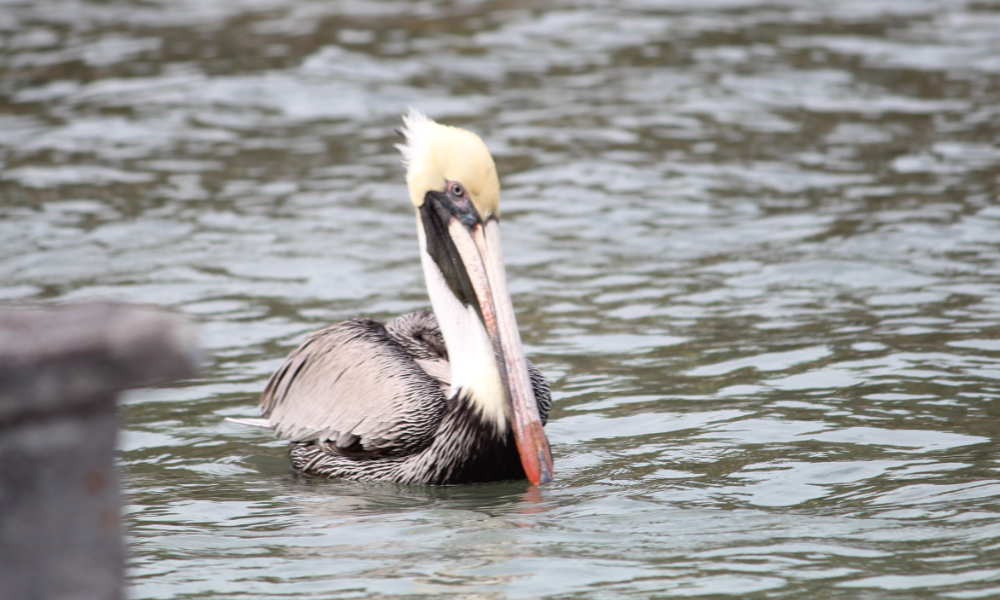
Few birds feel more at home along the Ambergris Caye coastline than the Brown Pelican.
Sometimes one sits almost motionless on a dock or piling, looking perfectly content to watch the water. Other times, several glide just above the Caribbean before one suddenly rises, folds its wings, and plunges headfirst into the sea.
That dramatic fishing style gets most of the attention, but Brown Pelicans also have an interesting partnership during nesting season.
They are seasonally monogamous, meaning a male and female pair for the breeding season rather than necessarily staying together for life.
The male begins by choosing and defending a nesting area. Once he attracts a female, he gathers nesting material and brings it to her, while she handles much of the actual construction.
Both parents then help incubate the eggs and care for their young.
Their partnership may only last for one nesting season, but there is plenty of teamwork packed into it.
And the next time you watch a Brown Pelican glide past the dock or disappear beneath the surface in a splash, you’ll know there is more to its day than catching the next fish.
Where Can You See These Animals in Belize?
For the marine animals on this list, the Belize Barrier Reef is the natural place to start.
Ambergris Caye sits close to the reef, giving visitors access to snorkeling and diving sites filled with coral, schools of fish, and smaller reef creatures that are easy to miss when you are only watching for the biggest animals.
French Angelfish, Butterflyfish, and gobies may all be part of the reef experience, while seahorses require a much sharper eye and a little luck.
A knowledgeable guide can make a big difference. They know what habitats to watch and often notice the small movements and shapes that most of us would swim right past.
Birdlife can be even easier to encounter.
You may see Brown Pelicans gliding along the shoreline, Laughing Gulls calling overhead, or an Osprey circling above the water without ever leaving Ambergris Caye.
And that may be the best part.
You don’t always need a wildlife expedition to notice Belize’s animals. Sometimes you just need to stop swimming, look up from the beach, or sit quietly at the end of the dock for a while.
A Different Kind of Belize Love Story
The more time you spend watching Belize’s wildlife, the more little stories begin to appear.
That colorful fish may have a partner nearby. The tiny goby on a coral head may be sharing its cleaning station with a mate. The Osprey carrying a fish across the sky may be heading back to a nest.
Not every partnership lasts forever, and monogamy in the animal world takes many different forms. Some pairs stay together for years, while others share only a breeding season.
That doesn’t make them any less interesting.
On your next trip to Ambergris Caye, take a little time to simply watch. Float above the reef for another minute. Look around when you spot an Angelfish. Follow the flight of an Osprey or sit quietly while the pelicans fish beyond the dock.
You might be surprised by how much is happening when you slow down long enough to notice.