




Book Now : 1-844-360-1553
Belize Reservations Office
Phone: +501-226-4297
Phone: 1-844-360-1553
WhatsApp: +501-670-4811
E-mail: [email protected]


Close
Belize Reef & Water Adventures
Great Blue Hole Belize: Dive, Snorkel, Fly Over & Visit Guide
Feb 10, 2025
The Great Blue Hole Belize can be experienced in three main ways: by diving, snorkeling as part of a full-day Lighthouse Reef trip, or seeing it from above on a scenic flight. The best choice depends on what you want from the experience.
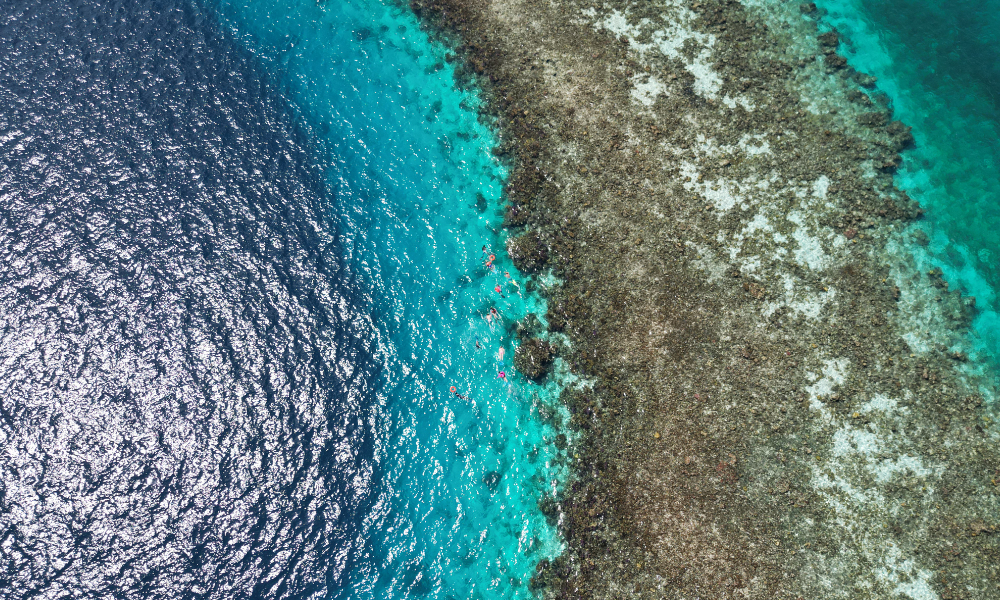

A flyover gives you the famous view of the Blue Hole’s circular shape, while a boat trip takes you out to Lighthouse Reef for a full day on the water.
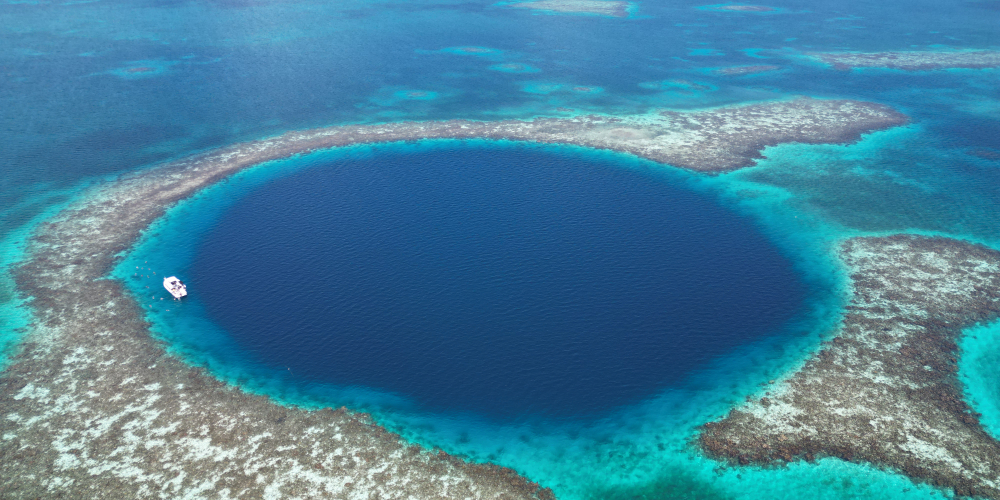
Located near the center of Lighthouse Reef Atoll, the Great Blue Hole is a marine sinkhole roughly 1,000 feet across and more than 400 feet deep. Its dark blue center, surrounded by lighter turquoise reef, makes it one of Belize’s most recognizable natural landmarks.
The Blue Hole Natural Monument forms part of the UNESCO-listed Belize Barrier Reef Reserve System. Below the surface, steep walls lead to overhangs and large stalactites that formed when sea levels were much lower and the cave system was above water.
Explorer Jacques Cousteau helped bring international attention to the Great Blue Hole after visiting Belize aboard the Calypso in 1971. Today, divers travel here for its unusual geology and deep-water experience, while snorkelers and sightseeing passengers can experience Lighthouse Reef without making the deep dive.
| Experience | Best For | Time Needed | What You’ll Experience |
|---|---|---|---|
| Scenic flyover | Aerial views and photography | About an hour, depending on operator | The full circular shape of the Blue Hole and surrounding reef |
| Diving | Certified, experienced divers | Full day by boat | Deep water, limestone overhangs and stalactites |
| Snorkeling | Non-divers and mixed groups | Full day by boat | The Blue Hole’s upper area plus additional Lighthouse Reef snorkeling |
| Full-day boat trip | Travelers wanting an offshore experience | Full day | Blue Hole, reef stops, Half Moon Caye and open-water scenery |
How the Great Blue Hole Formed
The Great Blue Hole began as part of a limestone cave system when global sea levels were much lower during the last Ice Age.
At that time, the cave was above water, allowing stalactites and other limestone formations to develop. As the climate warmed and sea levels gradually rose, the cave flooded and sections of its roof collapsed, creating the deep marine sinkhole seen today.
Those submerged formations do more than make the Blue Hole an unusual dive site. Scientists have also studied deposits from the area to learn more about past changes in sea level, climate and major storm activity.
Divers can still see evidence of that history in the large limestone stalactites and overhangs found deep inside the Blue Hole.
Best Ways to Experience the Great Blue Hole Belize
There is no single best way to experience the Great Blue Hole. Diving, snorkeling and flying over it offer very different perspectives.
Diving the Great Blue Hole
Diving offers the closest look at the geological features that made the Great Blue Hole famous.
The dive begins around the shallower reef before descending along the inner wall into much darker blue water. Recreational Blue Hole dives may reach approximately 130 feet, where large limestone stalactites and overhangs become visible.
Caribbean reef sharks are sometimes seen moving through the open water, but the main attraction here is the geology rather than abundant coral or marine life.
Because of the depth, this should not be treated as a beginner dive. Divers need appropriate certification, recent dive experience and confidence in deep-water conditions.
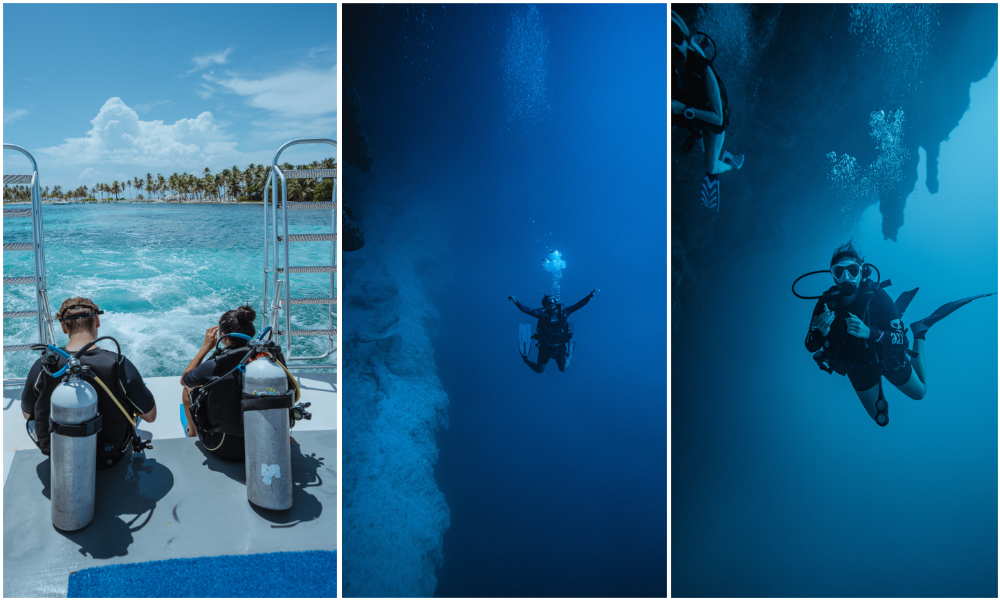
With Amigos Del Mar, the current full-day itinerary combines the Great Blue Hole with Half Moon Wall and Long Caye Aquarium.
The additional Lighthouse Reef dives provide a more colorful reef experience and create a strong contrast with the darker environment inside the Blue Hole.
For certification, recent-dive requirements and preparation, see our Blue Hole Belize diving requirements guide.
Snorkeling the Great Blue Hole
You do not need to be a diver to visit the Great Blue Hole.
Snorkelers can join full-day trips to Lighthouse Reef and explore the shallower areas around the Blue Hole while divers descend into the sinkhole.
The experience is very different from diving. The famous stalactites and overhangs are deep below the surface, so snorkelers should not expect to see the formations associated with the deep dive.
Instead, the day combines visiting the Blue Hole with snorkeling at additional sites around Lighthouse Reef. For many snorkelers, those other stops provide the more colorful coral and marine-life encounters of the trip.
For a closer look at the experience, see our Great Blue Hole Belize snorkeling guide.
Flying Over the Great Blue Hole
The view that made the Great Blue Hole famous is best appreciated from the air.
From above, you can clearly see the dark circular sinkhole surrounded by the lighter turquoise waters of Lighthouse Reef. A scenic flight is also considerably shorter than a full-day boat excursion.
Choose a flyover if your priority is seeing the Blue Hole’s shape, taking aerial photographs or experiencing the landmark without spending a full day offshore.
Great Blue Hole Flyover vs Boat Trip
A flyover and a boat trip offer completely different experiences.
Choose a flyover if you want:
- the famous aerial view
- a shorter excursion
- photographs of the entire Blue Hole
- to experience the landmark without diving or snorkeling
Choose a boat trip if you want:
- a full day at Lighthouse Reef
- scuba diving or snorkeling
- additional reef sites
- time at Half Moon Caye
- a more immersive offshore experience
Some travelers choose both because the view from the air and the experience at water level are so different.
Best Time to Visit the Great Blue Hole Belize
Trips to the Great Blue Hole operate throughout the year, but offshore conditions matter more than choosing one specific month.
Boat trips cross open Caribbean water to reach Lighthouse Reef, so wind, waves and weather can affect whether a tour operates on a particular day.
If the Blue Hole is one of the main reasons for your trip, leave some flexibility in your itinerary instead of scheduling the excursion for your final day. That gives you another opportunity if weather causes a postponement.
Scenic flights are also weather-dependent, although they require much less time than a full-day boat excursion.
Planning Your Great Blue Hole Visit
A little flexibility makes planning a Blue Hole excursion easier.
Decide how you want to experience it first. Seeing the Blue Hole from above, diving inside it, and spending a full day snorkeling Lighthouse Reef are very different experiences.
Schedule boat trips earlier in your vacation. Offshore weather can affect Blue Hole excursions. An earlier booking gives you another possible day if conditions cause a cancellation or postponement.
Confirm current requirements before booking. Divers should check certification and recent-dive requirements, while snorkelers should confirm the itinerary, equipment and applicable protected-area fees.
Expect a full day by boat. The Great Blue Hole is at Lighthouse Reef Atoll, well beyond the nearby reef sites around Ambergris Caye.
Follow protected-area guidelines. Avoid touching coral or wildlife and follow your guide’s instructions while visiting the Blue Hole and surrounding reef sites.
Great Blue Hole FAQs
Can non-divers visit the Great Blue Hole?
Yes. You can visit on a snorkeling excursion or see the Blue Hole from the air on a scenic flight, so scuba certification is not required simply to experience the destination.
How far is the Great Blue Hole from San Pedro?
The Great Blue Hole is at Lighthouse Reef Atoll, well offshore from Ambergris Caye. Boat excursions from San Pedro are therefore full-day trips rather than short reef outings like Hol Chan or Mexico Rocks.
What happens if the weather is bad on the day of my Blue Hole tour?
Offshore boat trips and scenic flights depend on weather conditions. If the Blue Hole is a priority, schedule it earlier in your vacation so you have another possible day if your excursion needs to be rescheduled.
Should I book the Blue Hole before arriving in Belize?
For a specific date or a mixed group of divers and snorkelers, booking in advance is a good idea. Always confirm current certification requirements, fees, cancellation policies and what is included directly with the operator.