




Book Now : 1-844-360-1553
Belize Reservations Office
Phone: +501-226-4297
Phone: 1-844-360-1553
WhatsApp: +501-670-4811
E-mail: [email protected]


Close
Where is Belize Located? Your Complete Guide to Belize’s Geography
Feb 25, 2026
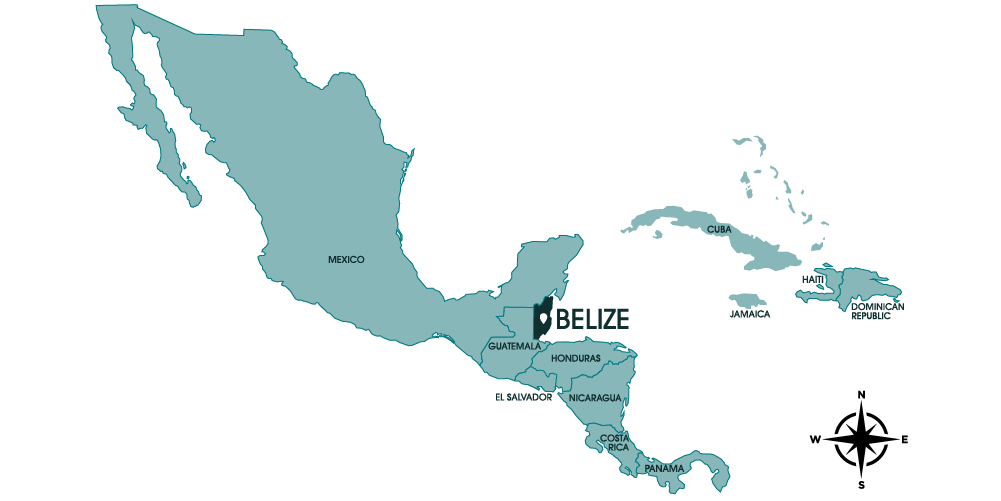
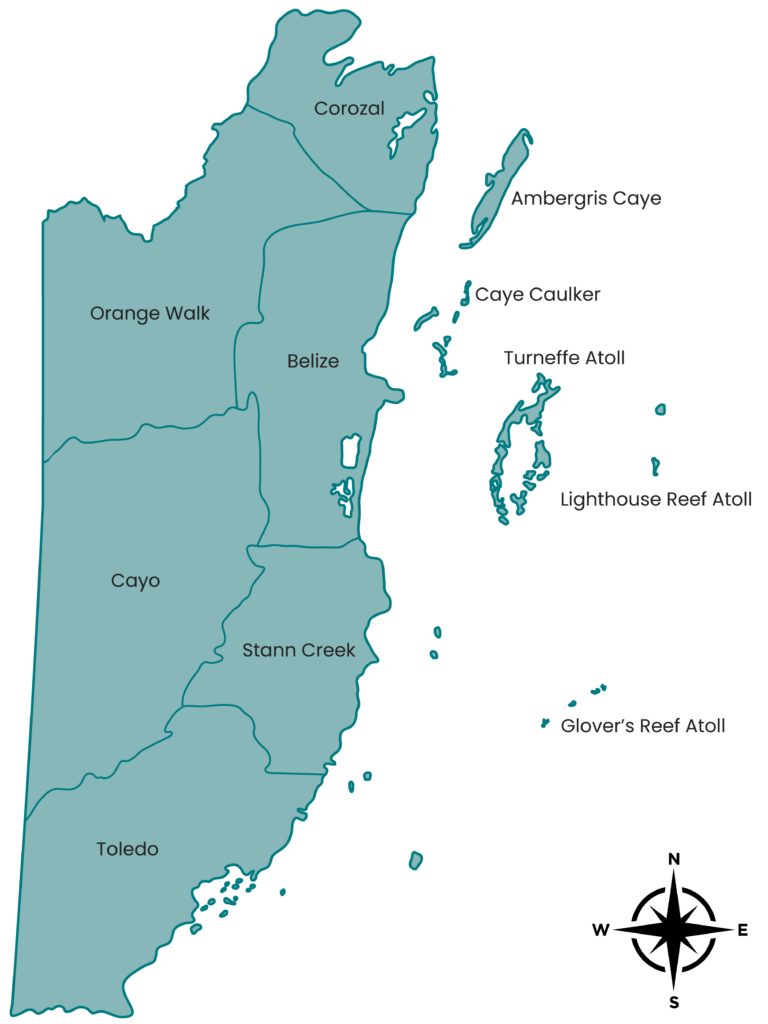
Belize is located on the northeastern coast of Central America, bordered by Mexico to the north, Guatemala to the west and south, and the Caribbean Sea to the east. This small but remarkable country sits on the Yucatan Peninsula, offering a unique position where Caribbean island culture meets ancient Maya civilization and lush Central American rainforests.
Belize at a Glance
| Location: | Northeastern Central America, Caribbean Coast |
| Capital: | Belmopan |
| Largest City: | Belize City |
| Size: | 8,867 square miles (slightly smaller than Massachusetts) |
| Population: | Approximately 400,000 |
| Official Language: | English |
| Currency: | Belize Dollars (BZD), pegged 2:1 USD |
| Time Zone: | Central Standard Time (no daylight saving) |
| Coastline: | 240 miles of Caribbean shoreline |
| Coordinates: | 17.1899° N, 88.4976° W |
Belize’s Precise Geographic Position
Situated between latitudes 15° 52′ and 18° 30′ North and longitudes 87° 15′ and 89° 15′ West, Belize occupies approximately 8,867 square miles of land, slightly smaller than the state of Massachusetts. Despite its compact size, Belize boasts an incredible 240 miles of Caribbean coastline, along with hundreds of offshore cayes (islands) that dot the turquoise waters of the Western Caribbean.
The country’s location places it squarely in the heart of the ancient Maya world, surrounded by some of the most significant archaeological sites in Mesoamerica. To the north, Mexico’s Yucatan state and the resort destination of Cancún are just a short drive away. To the west, the border with Guatemala provides access to the famous Maya ruins of Tikal and the highlands of Central America.
Why Belize’s Location is Unique
Belize stands out as the only English-speaking country in Central America, a distinction that traces back to its history as British Honduras. This linguistic heritage, combined with its geographic position, makes Belize an accessible gateway for North American travelers seeking authentic Central American and Caribbean experiences.
The country’s location on the Mesoamerican Biological Corridor means it serves as a crucial link in one of the world’s most biodiverse regions. From the Caribbean coast to the Maya Mountains in the interior, Belize’s strategic position has created a remarkable convergence of ecosystems, cultures, and experiences.
Understanding Belize’s Geographic Diversity
What makes Belize’s location truly special is the extraordinary variety packed into such a small area. The country’s geography can be divided into distinct zones:
The Caribbean Coast and Cayes: The eastern coastline features mangrove-lined shores, white sand beaches, and hundreds of cayes. Just offshore lies the Belize Barrier Reef, the second-largest coral reef system in the world, stretching over 180 miles along the coast. This reef system is part of the larger Mesoamerican Reef that extends from Mexico to Honduras.
The Coastal Plain: Moving inland from the coast, you’ll find a flat coastal plain with citrus groves, sugarcane fields, and wetland habitats. This region experiences the warm, humid climate typical of tropical coastal zones.
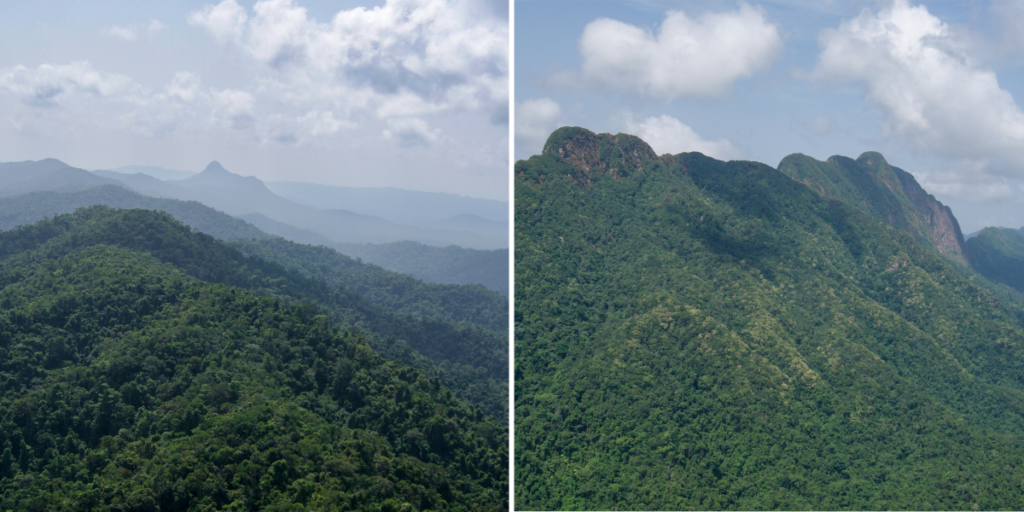
The Maya Mountains: The southern and western interior rises into the Maya Mountains, with Victoria Peak reaching 3,688 feet, the highest point in Belize. This mountainous region features dense jungle, hidden waterfalls, and ancient Maya sites tucked into the forest.
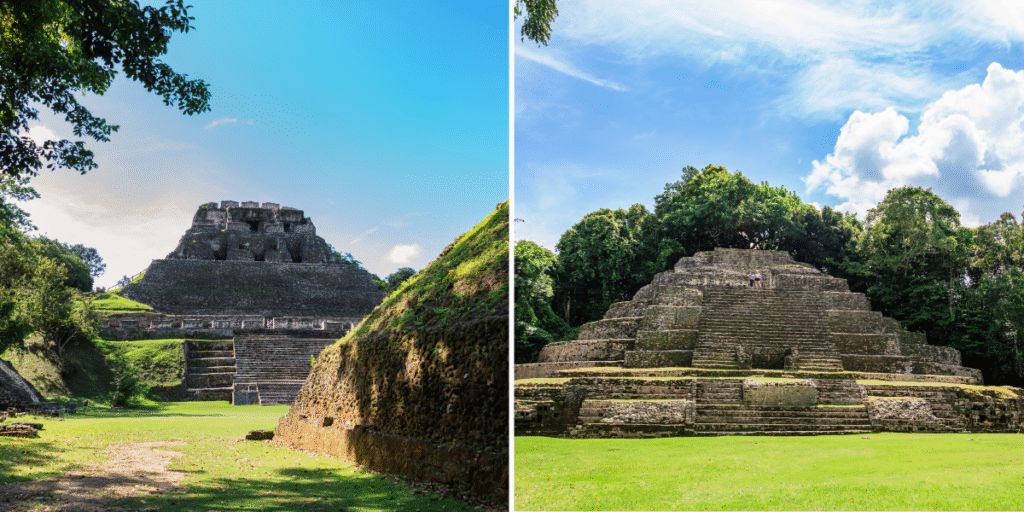
The Northern Lowlands: The northern part of Belize consists of relatively flat terrain covered in tropical forest, where many of the country’s most impressive Maya ruins are located, including Lamanai and Altun Ha.
How to Get to Belize: Accessibility from Around the World
One of the greatest advantages of Belize’s location is its accessibility, particularly from North America. The Philip S.W. Goldson International Airport, located just outside Belize City, serves as the main gateway with direct flights from major hubs.
Flight times from major North American cities:
- Houston or Dallas: Approximately 2 hours
- Miami: Approximately 2 hours
- Atlanta: Approximately 2.5 hours
- Chicago: Approximately 3.5 hours
- Los Angeles: Approximately 4.5 hours
- New York: Approximately 4 hours
- Toronto: Approximately 4.5 hours
For travelers already in Central America, Belize is accessible by land from both Mexico and Guatemala, making it easy to incorporate into a broader regional itinerary. The northern border crossing at Chetumal, Mexico, and the western crossing near Benque Viejo del Carmen connect Belize to the Pan-American highway system. Regional travelers can also reach Belize by short flights from Honduras and Panama, with connections through Belize City’s international airport.
Practical Information About Belize’s Location
Time Zone: Belize operates on Central Standard Time (CST) year-round and does not observe daylight saving time. This means Belize is typically the same time as the central United States during the winter months, and one hour behind during U.S. daylight saving time.
Climate: Located in the subtropics between 15 and 18 degrees north of the equator, Belize enjoys warm temperatures year-round, typically ranging from 75°F to 85°F. The country experiences two main seasons: the dry season (November through April) and the rainy season (June through October). The coastal areas benefit from constant trade winds that moderate the tropical heat.
Size and Distances: Despite being one of Central America’s smallest countries, Belize’s compact size is actually an advantage for travelers. You can drive from the northern border to the southern border in about five hours, and from the Caribbean coast to the western border in approximately two hours. This means you can experience reef snorkeling in the morning and jungle waterfalls in the afternoon.
Belize’s Location in the Regional Context
Understanding where Belize is located becomes even more meaningful when you consider its position within the broader region. Belize sits at the crossroads of several important cultural and natural areas:
The Maya World: Belize was a crucial part of the ancient Maya civilization, and its location places it among the most significant Maya archaeological zones. Visitors can explore over a dozen major Maya sites within Belize, including the impressive Caracol, Xunantunich, Lamanai, and Altun Ha. Within a short distance of Belize, you’ll find Tikal in Guatemala and numerous sites along the Yucatan Peninsula.
The Caribbean Basin: While Belize is geographically part of Central America, its eastern coast gives it a strong Caribbean identity. The culture, cuisine, and way of life in coastal Belize share more with Caribbean islands than with interior Central American countries.
The Mesoamerican Region: As part of Mesoamerica, Belize shares ecological and cultural characteristics with southern Mexico, Guatemala, Honduras, and El Salvador, creating a region distinct from both North and South America.
What Belize’s Location Means for Your Visit
The strategic location of Belize translates into practical advantages for visitors. The proximity to the United States means no jet lag for North American travelers and easy long-weekend getaways. The English-speaking environment eliminates language barriers that might exist elsewhere in Central America.
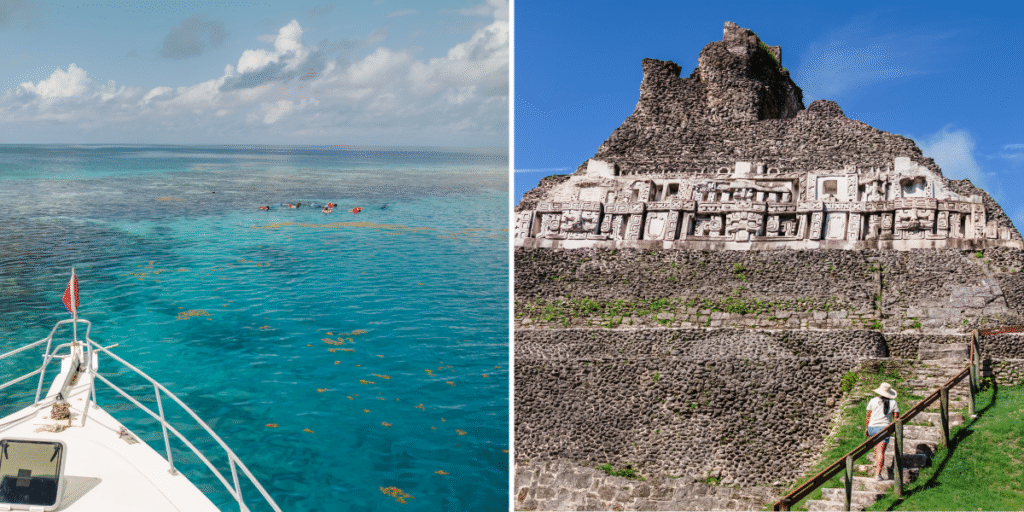
The geographic diversity means you can experience multiple ecosystems without long travel times. Stay at a beachfront resort on Ambergris Caye, take a day trip to explore Maya ruins inland, and dive the Blue Hole, all within the same vacation. Few destinations in the world offer such variety in such a compact, accessible package.
The location also means Belize serves as an excellent base for exploring the broader region. Many visitors combine their Belize vacation with trips to Mexico’s Riviera Maya, Guatemala’s Lake Atitlan, or the Bay Islands of Honduras.
The Bottom Line: Location, Location, Location
Where is Belize located? On the map, it’s a small country on Central America’s Caribbean coast. In reality, its location represents something far more valuable: a sweet spot where accessibility meets authenticity, where Caribbean beauty combines with Maya heritage, and where rainforest adventures are just miles from world-class reef diving.
Belize’s geographic position has shaped everything about the country, from its diverse ecosystems and multilingual culture to its status as one of Central America’s most visitor-friendly destinations. Whether you’re planning your first visit or your tenth, understanding Belize’s location helps you appreciate why this small country delivers such outsized experiences.
Ready to experience Belize’s perfect location for yourself? The journey to paradise is shorter than you think.
Plan Your Belize Adventure
Now that you know where Belize is located and why its geography makes it special, you’re ready to start planning your trip. Explore these helpful guides to make the most of Belize’s unique location:
Getting Ready to Visit:
- When is the Best Time to Visit Belize? – Learn how Belize’s location affects weather and seasons
- Introducing the Complete Belize Packing List – Prepare for Caribbean coast and jungle adventures
- Explore San Pedro, Ambergris Caye: A Guide to Dining, Sleeping, and Fun! – Complete planning resource for first-time visitors
Frequently Asked Questions About Belize’s Location
Is Belize in South America or Central America?
Belize is located in Central America, not South America. It sits on the northeastern coast of the Central American isthmus, which connects North and South America. Central America consists of seven countries: Belize, Guatemala, Honduras, El Salvador, Nicaragua, Costa Rica, and Panama.
Is Belize considered part of the Caribbean?
While Belize is geographically part of Central America, it’s culturally and ecologically connected to the Caribbean. With its Caribbean coastline, barrier reef, and island culture, Belize is a member of the Caribbean Community (CARICOM) and shares more cultural similarities with Caribbean nations than many of its Central American neighbors.
What countries border Belize?
Belize shares borders with two countries: Mexico to the north (specifically the state of Quintana Roo) and Guatemala to the west and south. The eastern border is the Caribbean Sea, with no neighboring countries across the water until you reach Honduras’ Bay Islands approximately 75 miles offshore.
How far is Belize from the United States?
Belize is approximately 800 miles from Houston, Texas, and about 850 miles from Miami, Florida. These translate to roughly 2-hour direct flights. The proximity makes Belize one of the closest tropical destinations for U.S. travelers, especially those in the southern and central states.
Is Belize safe to visit given its location?
Belize is generally safe for tourists, particularly in resort areas, cayes, and popular tourist destinations. Like any country, it’s important to stay aware of your surroundings and follow common-sense safety practices. The tourism zones, including Ambergris Caye, Placencia, and Cayo District, maintain strong safety records and welcome hundreds of thousands of visitors annually.
Do I need a passport to visit Belize?
Yes, all visitors to Belize need a valid passport. U.S. and Canadian citizens do not need a visa for stays up to 30 days. The passport must be valid for at least six months beyond your planned departure date from Belize.
What language do they speak in Belize?
English is the official language of Belize, making it the only English-speaking country in Central America. However, due to its diverse population and location, you’ll also hear Spanish, Kriol (Belizean Creole), Maya languages, and Garifuna spoken throughout the country.