




Book Now : 1-844-360-1553
Belize Reservations Office
Phone: +501-226-4297
Phone: 1-844-360-1553
WhatsApp: +501-670-4811
E-mail: [email protected]


Close
Birding on North Ambergris Caye: A Full-Day Tour with a Local Guide
Apr 2, 2026
Ambergris Caye isn't only for water enthusiasts, though you'd be forgiven for thinking so. Belize has become one of Central America's top birding destinations, and while the mainland reserves get most of the attention, the island has been quietly building its own story: over 200 documented bird species across mangrove channels, wetlands, and coastal scrub that sit minutes from the beach.
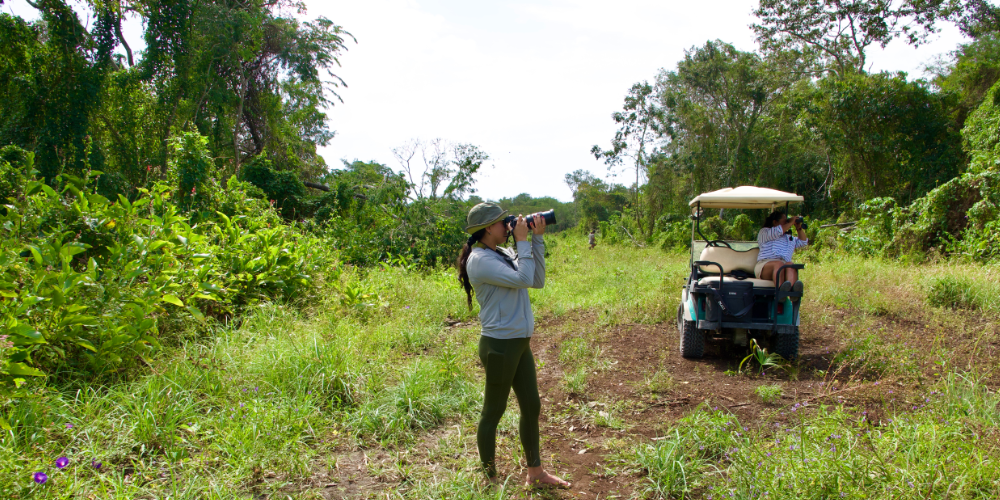
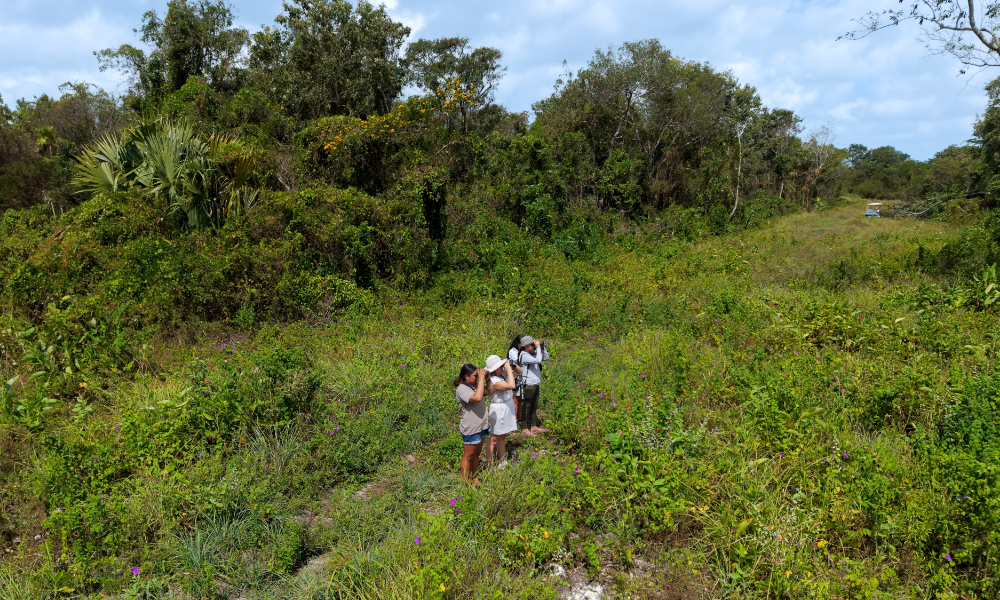
We decided to find out firsthand. Three Sandy Point Resorts staff members, a local photographer, and a full day with local guide Rochelle Hancock of Island Birding Adventures. We set six target birds and came home with four of them. What surprised us was how accessible it all was. No jungle hikes, no remote lodges — just a golf cart, a knowledgeable guide, and habitats that delivered something new around every corner. One of us had almost no birding experience going in, and ended up having one of the best days on the island — learning how to use binoculars, picking up bird calls, and spotting things the rest of us had walked straight past.
Birding on Ambergris Caye: what makes it work
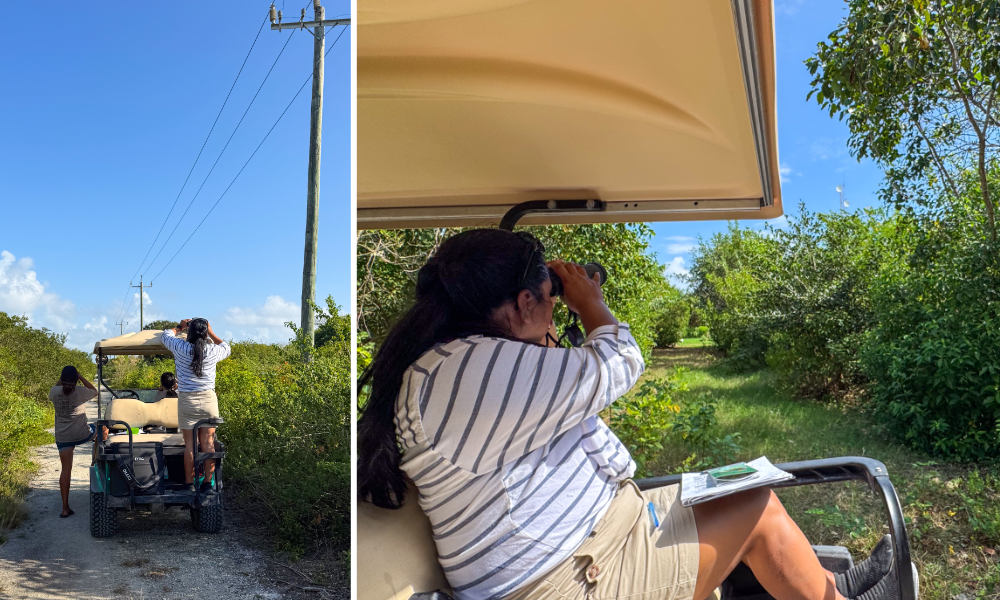
Ambergris Caye makes birding genuinely easy. You cover ground by golf cart along gravel and dirt back roads through scrub and mangrove, stopping wherever someone spots activity, then rolling on to the next habitat. No long trail hikes, no strenuous walking.
What makes it productive is how close everything sits to each other. Caribbean shoreline on the east, calm lagoon and mangrove on the west, scrub interior in between. Coastal specialists and wetland birds coexist within minutes of each other. You are not choosing between shorebirds and inland species. You get both in the same morning.
Why a local birding guide changes everything
Our guide was Rochelle Hancock of Island Birding Adventures, a lifelong Ambergris Caye resident who has been guiding on the island since 2023. Local knowledge here goes well beyond knowing which habitats hold which species. It means knowing where birds are likely to be, and recognizing the specific spots worth checking.
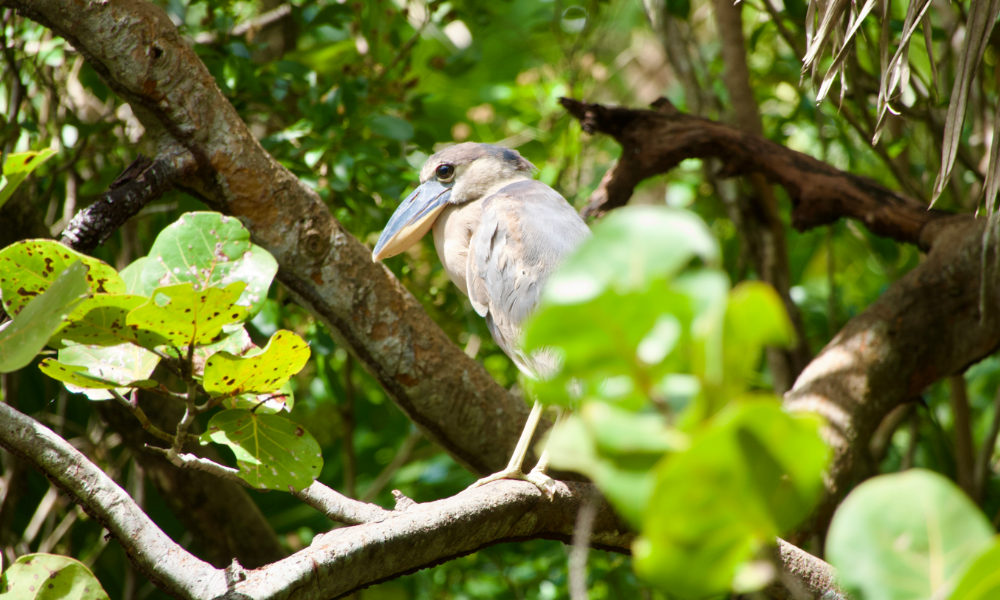
The Boat-billed Heron is the clearest example. This nocturnal species spends its days roosting in dense vegetation, tucked into exactly the kind of shadowy scrub that looks like nothing from a passing golf cart. Rochelle knew the roost site. Scanning into the branches revealed a small group of them hunkered in the canopy, wide bills and dark caps visible once you knew where to look. Without Rochelle, we would have rolled straight past.
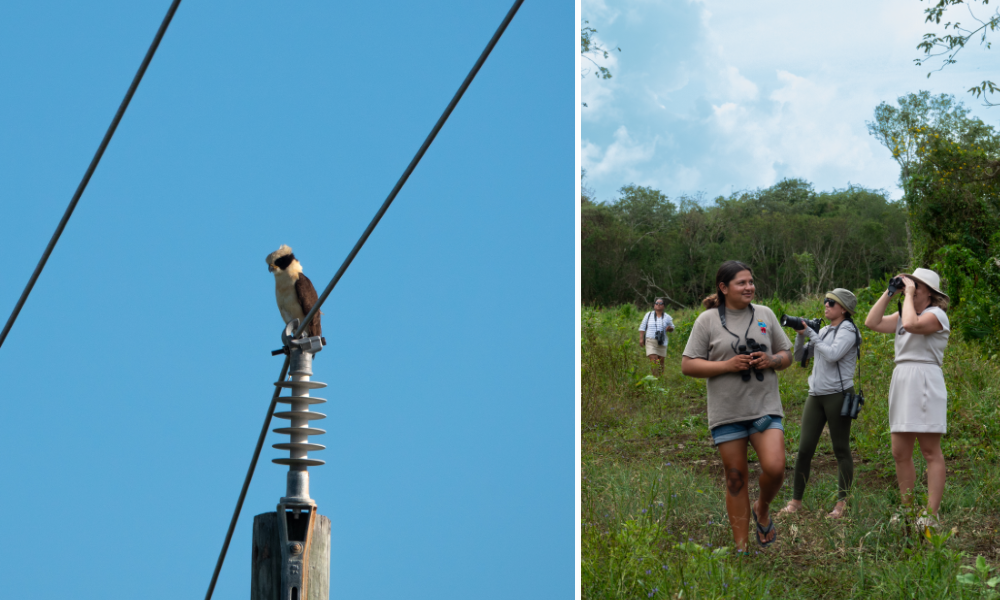
The Laughing Falcon sat silent and still on top of a utility pole along a narrow scrub-lined track. Both it and the Boat-billed Heron are the kind of birds you drive straight past without a guide who knows exactly where to look.
Half-day or full day?
Island Birding Adventures offers both. For most visitors, a half-day tour is a strong introduction to birding on Ambergris Caye. North and South Ambergris Caye have slightly different species profiles, so anyone looking to build a comprehensive island list may want to consider one of each.
The full-day format covers more ground and reaches more habitats. A typical full day can reasonably yield 40 to 60 species depending on conditions and time of year. Our group birded for over eight hours and logged more than 80 species, well above what any of us expected from a single island outing.
When to go: timing your Ambergris Caye birding tour
The single most important logistical decision on a birding tour is when you start. Earlier is better without exception.
Bird activity peaks in the cooler hours of early morning. As the sun climbs and the heat builds, movement slows and species that were vocal and visible become harder to locate. Start at first light if you can manage it. The light is better for spotting movement in the canopy and along the water’s edge, and the temperature makes the whole experience considerably more pleasant.
One thing worth saying about breakfast: don’t skip it and don’t skimp on it. The early start makes it tempting to keep things light, but you’re outside for hours and you will feel it by mid-morning if you haven’t eaten properly.
As for time of year, Ambergris Caye has resident species that can be found year round, but November through April is the sweet spot. The dry season brings comfortable temperatures and lower humidity, and North American migrants arrive to join the island’s resident species, adding significantly to what you can expect to see in a single day. March and April are particularly good for migration, with northbound birds often showing their brightest breeding plumage.
The rainy season from May through October is still worth considering, especially for early morning sessions before afternoon showers arrive. Accommodation rates are lower, the popular spots are quieter, and resident birds are actively breeding, which means more territorial behavior and easier spotting.
Mangroves, wetlands, and scrub: the habitats that deliver
The route heads north from Belizean Shores, and as development thins out, the character of the island shifts noticeably. We moved through the area near Indigo, east of Secret Beach, continuing north past Costa Blu, Sapphire Beach, and up toward Reef Haven Resort and beyond Tranquility Bay. By the time we reached the more remote stretches, the surroundings were mangrove, the Caribbean Sea, and low coastal scrub. At points the track opens onto the Caribbean shoreline, palms framing a view of turquoise water and the distant white line of the barrier reef. At others it winds alongside still inland lagoons, mangrove closing in on all sides, and full of wading bird activity.
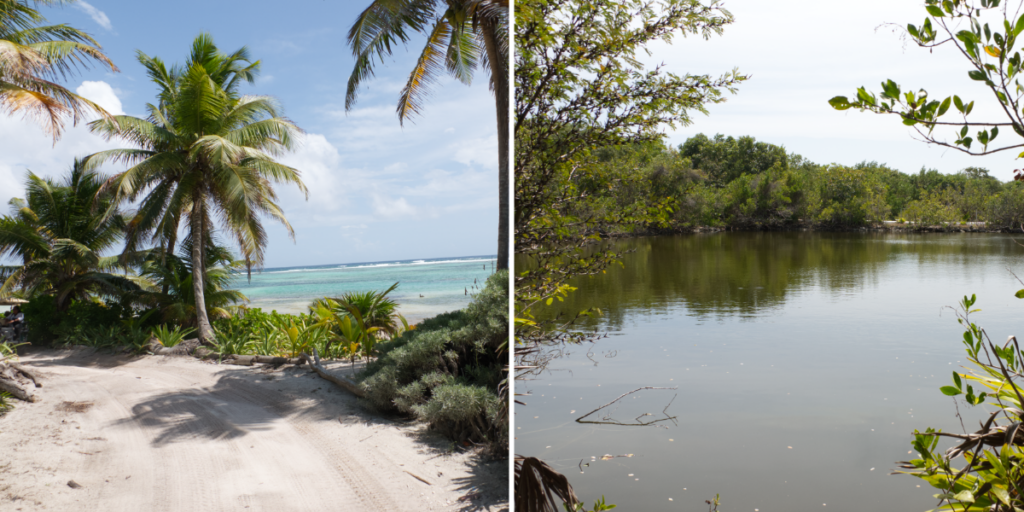
Rochelle’s approach was to move deliberately between habitat types rather than spending extended time in any one place. A mangrove pond produces a different set of species than a coastal scrub patch, and covering both in the same morning builds a richer list than staying put. The wading birds and shorebirds appear along the water edges. Raptors watch from exposed perches. Songbirds move through the scrub and mid-canopy. Seabirds work the Caribbean Sea and shoreline.
Target birds on Ambergris Caye: what we were after
We went into the day with six target birds and came home with four of them.
Target species found:
• Boat-billed Heron
• Laughing Falcon
• Roseate Spoonbill
• Black-headed Trogon
Still on the list for next time:
• Northern Potoo
• Yucatan Jay
The Roseate Spoonbill was one of the most visually striking sightings of the day. We found them wading and feeding in a shallow mangrove pond, sweeping their distinctive bills through the water in that slow, side to side motion. The pink plumage against the green mangrove edge is the kind of thing that stops you mid-sentence.
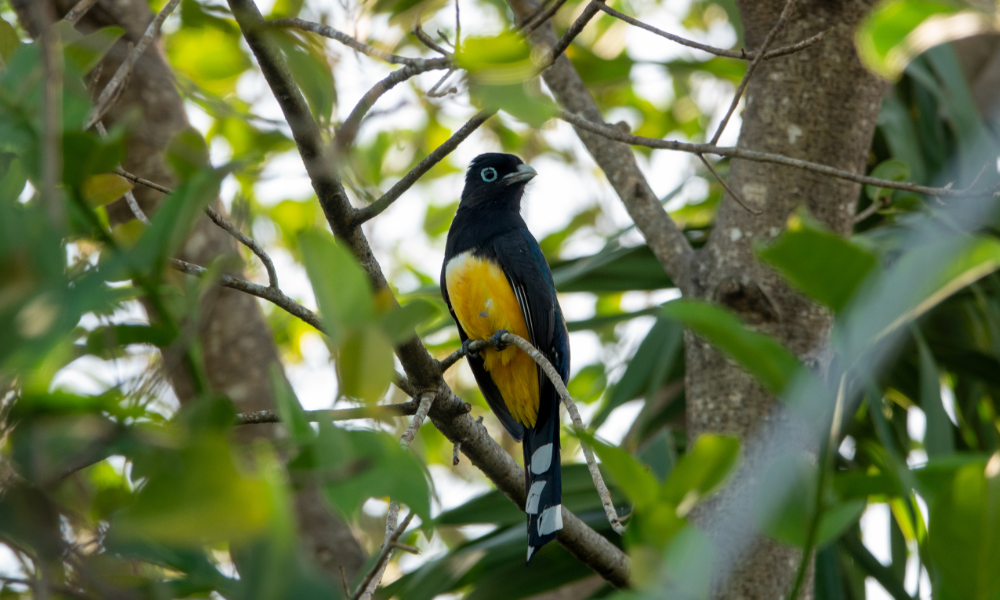
Two Black-headed Trogons were perched in the scrub right off the main road. We almost drove past them entirely — it was only slowing down that gave us the sighting. Once we stopped you could hear them calling back and forth across the road, which made locating them in the vegetation much easier. Each time one moved it felt like starting the search over again.
The Northern Potoo and the Yucatan Jay both stayed hidden. The Potoo is a nocturnal species that roosts motionless in dense scrub during the day, invisible unless you know the exact spot. The Jay, a striking blue and black corvid found only in the Yucatan Peninsula and northern Belize, simply did not show. Two misses out of six targets is not a bad result, and both give us a reason to go back.
Beyond the targets, the day produced sightings we hadn’t anticipated. A Bare-throated Tiger Heron appeared in a clearing at the edge of the scrub, neck stretched long and upright in that characteristic alert pose, heavily streaked brown and buff, blending convincingly into dappled light and grass. A Great Blue Heron claimed a concrete dock on the Caribbean side, standing patient and unbothered against a backdrop of green water and breaking reef.
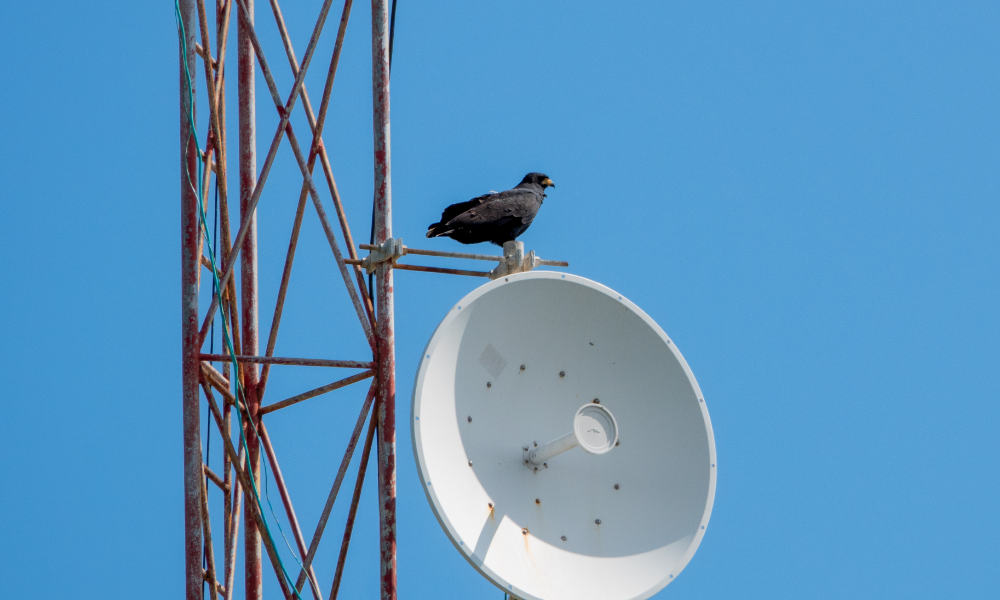
Further into the tour, a Common Black Hawk perched high on a communications tower at the forest edge, dark and stocky against the open sky. That one I spotted myself, and there is a particular satisfaction in calling out a bird and having the guide confirm it.
What the full species list looks like
By the end of the day we had logged over 80 species. The eBird hotspot checklist accounts for most of them, but not all. Rochelle knows areas and birds that fall outside the standard hotspot boundary, and some of what she finds simply does not show up in the official records. That local knowledge is part of what the number reflects.
The herons alone could fill a morning. Alongside the Bare-throated Tiger-Heron and Great Blue, we logged Little Blue, Tricolored, Reddish Egret, Snowy Egret, Green Heron, Great Egret, and Western Cattle-Egret. The mangrove edges and lagoon shallows concentrate wading birds in a way that feels almost implausible until you are standing there watching five species work the same stretch of water.
The orioles
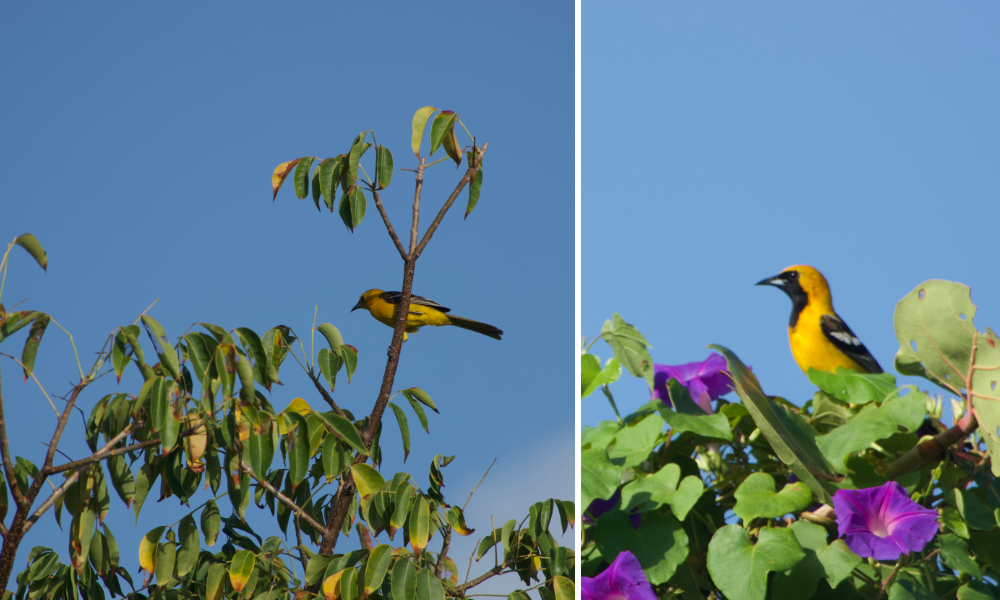
The scrub interior produced an oriole count that caught all of us off guard. Five species in a single day: Black-cowled, Hooded, Yellow-backed, Orange, and Altamira. Each one distinct enough that even newer birders in the group could follow along as Rochelle called them out. The Altamira in particular is a striking bird, large and boldly marked, and seeing it alongside the smaller Hooded in the same patch of scrub made for a useful comparison that no field guide quite replicates.
The warblers
Migration timing worked in our favour. The warbler list included Louisiana Waterthrush, Black-and-white, Tennessee, American Redstart, Northern Parula, Magnolia, Northern Yellow, Palm, Yellow-throated, and Black-throated Green. Ten warbler species in a day is the kind of number that sounds unremarkable on paper and feels anything but in the field. Warblers move fast and rarely hold still, and picking through a mixed flock moving through the canopy is the kind of birding that sharpens your eye quickly.
The hummingbirds
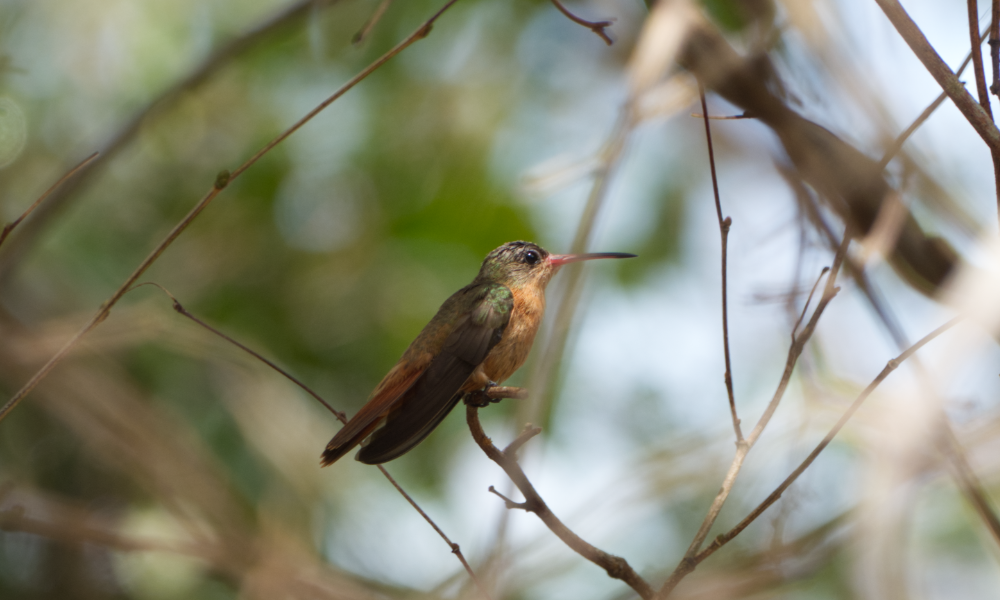
Three hummingbird species showed well: Green-breasted Mango, Canivet’s Emerald, and Cinnamon Hummingbird, with a fourth, the Rufous-tailed, added later in the day. Hummingbirds on the island tend to appear briefly and move on, so getting multiple species in decent light felt like a small victory each time.
Everything else
The day filled in with species that do not fit neatly into a highlight reel but contribute to the overall picture: Mangrove Vireo and Yucatan Vireo in the scrub, Mangrove Swallow low over the lagoon, Black Catbird moving secretively through dense vegetation, Morelet’s Seedeater along the scrub edges, and a Solitary Sandpiper picking along a quiet stretch of shoreline. Common Squirrel-Cuckoo. Laughing Gull. Royal Tern. Great Kiskadee announcing itself from every exposed perch it could find.
None of those are rare birds. But that is part of what a full day teaches you: the common species are common for a reason, and learning to read them quickly frees up attention for everything else. When you reconstruct the day afterward, going back through photos and checking eBird, over 80 species is the kind of total that makes the early alarm feel entirely justified.
Tips for birding on Ambergris Caye: what we’d do differently
A few honest lessons from our day that are worth passing on.
Dress for the sun and the scrub. Lightweight long sleeves and long pants are more comfortable than they sound in the tropics. On an open golf cart you pick up sun exposure quickly, and long sleeves handle insects better than repellent alone. Light colors, quick-dry fabric, and you will barely notice you are wearing them.
Food and water are taken care of. The full-day tour comes with water, fresh fruit, and sandwiches included. That said, the coastal breeze can mask how much you are sweating, so it is worth drinking more than you think you need throughout the day.
Resist the urge to chase birds you have already confirmed. When a species you have already logged reappears, the instinct is to stop for a better look or a better photo. That time is almost always better spent moving to the next habitat. Some of us learned this the hard way.
Island Birding Adventures runs private tours only, which means undivided attention and the flexibility to move at your own pace. Rochelle adjusted to our group throughout the day, slowing down when something interesting appeared and pushing on when we were ready. That kind of responsiveness makes a real difference over eight hours.
What surprised us as much as anything was how much we did not know about the island we live and work on. Some of our group have been on Ambergris Caye for decades and had no idea this kind of birding was right on their doorstep. We went in as novice birders and came out with a new way of seeing the island entirely. The Potoo and the Yucatan Jay are still on the list. That is not a failure — it is how birding works, and it is reason enough to go back. If your stay allows for more than one outing, we would not talk you out of it. We are already planning our next one.
How to book a birding tour on Ambergris Caye
To learn more about Island Birding Adventures, visit their Facebook page. Ready to see Ambergris Caye from a different angle? Contact our concierge team at Sandy Point Resorts to arrange your birding tour with Island Birding Adventures.
Continue exploring Belize birds
• Birding in San Pedro, Belize: Complete Island Guide for Bird Watchers